People in the US who work with large volumes of fresh water use acre-feet and cfs (cubic feet per second) almost exclusively. If an article refers to gallons or comparisons like swimming pools instead, consider it popular journalism rather than engineering. Science can use metric, if preferred.
acre foot is one of the funnier American units out there. It is defined as a foot × a chain (66 feet) × a furlong (660 feet). So you get this weird rectangular cuboid with very small height and a very long length.
m³ is already a pretty hard to visualize unit (unless you are used to visualize volume) but acre feet is just about impossible.
As a big proponent of the metric system, acre feet are pretty reasonable. An acre is a decent sized plot of land for a house in the ~dense country, you can easily picture it. Flood that to a foot and you have an acre foot.
A single m^3 is fairly easy to visualize, but once you get to higher amounts it's pretty meaningless.
I think you have to be pretty used to visualize volume before it becomes easy. I think having the unit based on a cube still helps though, especially since you can pick a different sized base cube based on the scale (mm³, cm³, deciliter, liter, m³, km³, etc.), having the base unit be this extremely low, and wide rectangular cuboid only aids in your visualization in a very specific context, namely how how many foots you are flooding your acre sized fields with water.
Yeah excellent point. When presenting numbers for reading/interpretation then talking in terms of cubes with a certain side length has to be the easiest to interpret. Its important to be specific about the units and not say "5 metres cubed" because that will just lead to confusion with m^3 (already confusing to be fair!).
An alternative is using "known" points of reference like Olympic swimming pools, the Sistine Chapel etc (similar to "an area the size of Belgium"). But that risks getting absurd.
> m³ is already a pretty hard to visualize unit (unless you are used to visualize volume) but acre feet is just about impossible.
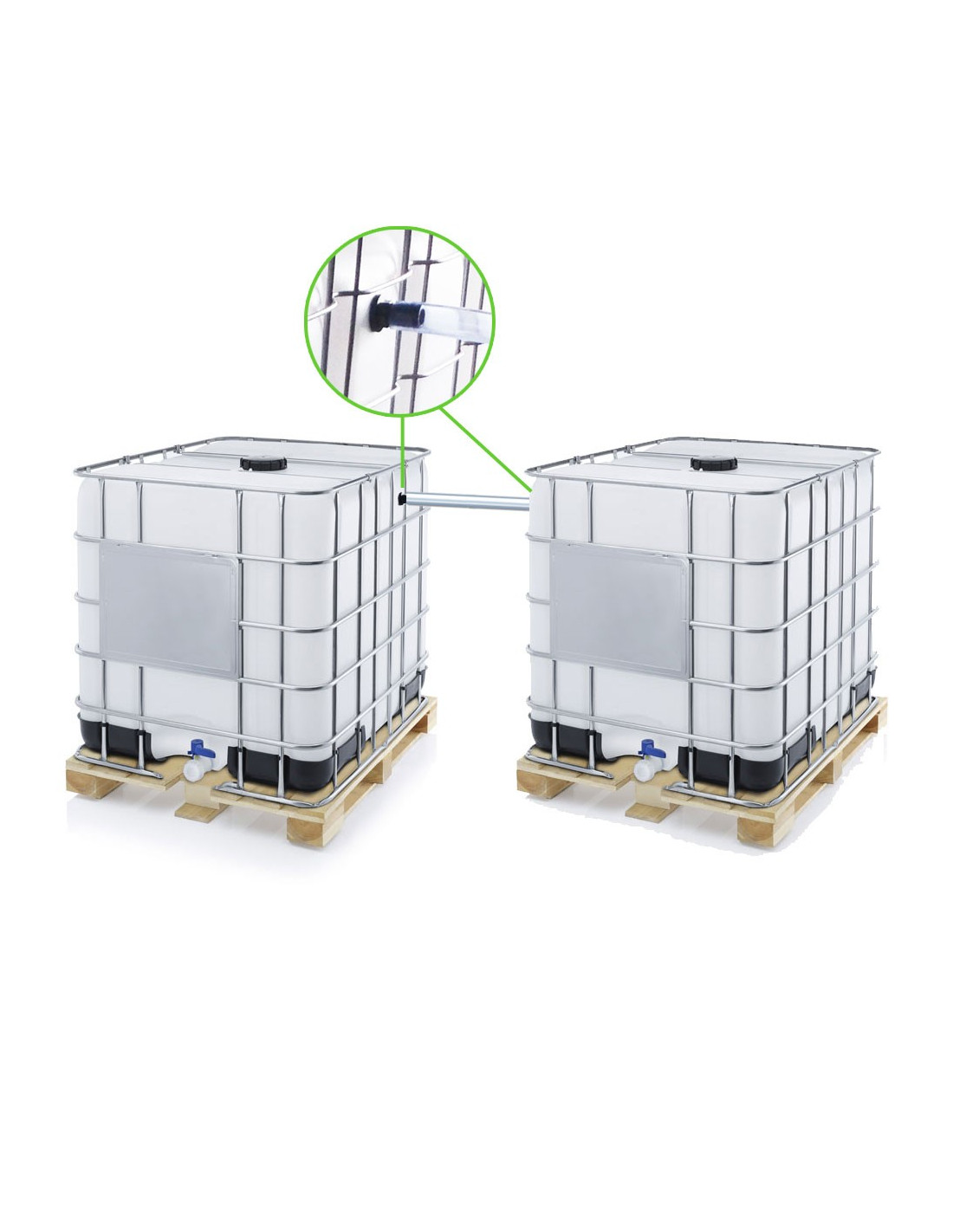
Idk about the US but in Europe 1m³ water tanks[0] are extremely popular as rainwater collectors.
Also they are approximately the size of a pallet, another popular item.
Whereas acre feet, since I don't know what both units are...
But "are meter" wouldn't help either, to be fair.
No, an acrefoot is defined as a foot × an acre. Acres are a unit of area, and can be any shape. They’re especially useful for lakes because you generally know the area that the lake covers and measuring the depth is really easy. If your lake covers 1234 acres and the water rises by a two and a half feet, then obviously you have gained 1234 × 2.5 = 3085 acrefeet of water. It’s designed to be useful without requiring anyone to do any unit conversions at all.
Firstly I don't think gp meant it literally, but conversationally as in: the definition decomposes to foot x chain x furlong.
Acres can be any shape, but gp is correct that acres were originally defined as chain x furlong (per wikipedia https://en.wikipedia.org/wiki/Furlong ). They're also correct that it's a weird combination of disparate sizes which doesn't lend itself to visualization.
On the one hand I would argue that you’re not supposed to visualize your lake as a bunch of rectangles. Visualize your lake as the shape the lake actually is.
On the other hand, for many people it’s easier to visualize than you might imagine. As you may know, virtually the entire US was surveyed and divided up into one mile × one mile sections. A square mile is exactly 640 acres. At one time a homesteader could buy that square mile and move west. Over time the minimum size of a homestead was halved and halved again until it was 160 acres, or one quarter of a square mile, around the time of the Civil War. These were often quartered again into 40 acre fields. A farmer and his family could expect to work two or three of those fields every year, rotating which one was fallow if they were smart. They are ¼ of a mile on a side.
You can zoom in on almost any random part of the US and find those squares everywhere. Farmland is all gridded with roads along the 1 mile section boundaries, and cities are a jumble. But in between the suburbs are made up of the smaller divisions. It is very common for a 40–acre field to be divided up into 13 lots of ~3 acres each. It is super common to find whole areas of 10–acre lots made by quartering those fields. And it is also not surprising to find a 10–acre lot that has been divided up into 1 acre lots that are all 66ft×660ft.
Here, as an example I [zoomed into a randomly–chosen point in the midwest](https://www.google.com/maps/@39.6540747,-86.0094355,1456m/da...). If you measure E McGregor Rd along the northern edge of the map you’ll find that it’s 1 mile long until it hits that jog. You can immediately see that this section was subdivided into four 160–acre farms, and some of those were subdivided into 40–acre fields. Knapp Rd runs north–south and divides the section in half. To the east is an older area of mostly 2, 3, and 5–acre lots. On the western side a developer has bought up 90 acres (two 40–acre fields connected by a 10–acre lot) and turned it into a very modern subdivision of houses each built on (approximately) half–acre lots. For many Americans, visualizing an acre is easy; it’s half the size of the land their house was built on, or their lot plus their neighbor’s lot, or some other similar amount.
Like I said, it is one of the funnier American units out there. I’m not arguing against it being useful in an American context (no doubt it is), but this connection with the mile markers, a common field size dived into 13 lots, and flooding of your fields by a foot of water, it only makes this unit even funnier.
It’s a great unit for dealing with lots of water though. Talk x billion gallons vs xxx million gallons and people glaze over. A m3 is too small, but the entire Colorado compact is only like 17 km3. The analogous km2-meter might work, but it’s still huge.
The acre-foot is a nice manageable size. Plus if you know you’ve got 160 acres planted, and you need 6 in of water over everything, it’s pretty easy figure the volume to request
That's a furrow width x a furrow length. I imagine our agrarian roots have something to do with this. Then you can easily find tables for expected food production from 1 acre of your crops.
> weird rectangular cuboid
A good 1:10 crop row.
> m³ is already a pretty hard to visualize unit
1000 1L bottles doesn't seem that hard to visualize.
This is just like the other weird American units, it works much better in the specific case it was designed around, but fail really fast and really bad in other contexts.
If you are a farmer with 26 acres of field that need to be irrigated the equivalence of 1 foot of water every 2 weeks throughout the dry season which is expected to last 3 months, it is easy to calculate that you need 26 × 6 acre feet of water for that. But ones you use volume for literally anything else the flaws of the unit become very apparent.
This accomplishes nothing useful, unless they plan to irrigate the wilderness to keep the brush green year round (of course, there is certainly not enough water for that).
Neither of the reservoirs in question are on that graphic, FYI. Both of these lakes are empty and generally would be in January. Which is why combined outflows of 2500 cubic feet per second is extraordinary. https://www.spk-wc.usace.army.mil/plots/california.html?name...
Which - to be clear - Tulare County is not a part of. While it's in the southern part of the San Joaquin Valley, that doesn't make it part of Southern California. The dividing line is around the Tehachapi Mountains.
Water released from these reservoirs would end up flowing northwards in the San Joaquin River, and eventually out to sea in the Sacramento Delta. It wouldn't do anything to help fight fires in Los Angeles; it's in entirely the wrong place for that.
That's not quite correct. The California aqueduct is able to transport water from the delta down to LA by pumping it over the mountains.
This is only a technicality though because even though the system includes the largest pumps in the world, it's still relatively small compared to a natural waterway at full capacity and it's already running.
Heh, everyone has a different no idea of the line between SoCal and NorCal. I saw a talk someone from ESRI who did a survey of Californians on where the line is. The only hard and fast rule is that “nobody wants Hanford”, apparently. But your line is one of the more southern ones, since most people include Bakersfield in SoCal.
> Tulare County water managers were perplexed and frustrated, noting both physical and legal barriers that make it virtually impossible for Tulare County river water to be used for southern California fires.
So... Trump just wanted Hugest Most Beautiful Water Moving Numbers so he could brag to his supporters, and he ordered it done no matter how useless or harmful it would be?
Oof. I'm remembering that 2018 letter [0] where some anonymous staff sought sympathy from the American public for their unsung work keeping Trump from Doing Something Crooked. (I still feel they were actually making it worse in the long run.)
This is going to be so much worse than the first term. It's only been 11 days and just nonstop chaos already, except the 'sensible' Republicans don't seem to care any more.
There are no sensible Republicans. They are all complicit. Even for the Democrats, it feels like Bernie, AOC, and Haskins are the only ones really fighting in Congress.
And Bernie last week was out there going "I'm ready to work with Elon Musk to help working families as he cuts government spending". Legitimately, pitching Republicans on how they're ceding all their power and ruining their economic future may be more effective at this point.
Bernie always does this. "I'm prepared to work with ${PERSON/GROUP} as they work to do ${POSITIVE-SOUNDING THING THEY CLAIM THEY'RE WORKING ON BUT WHICH HE KNOWS IS ACTUALLY A LIE OR EUPHEMISM}, also Medicare For All." I assume it's so that his enemies can't accuse him of being obstinate or unwilling to cooperate with plans to do ${POSITIVE THING}.
Yes. He tweeted a photograph of some flowing water earlier and took credit for it, and of course an army of sycophants marveled over the quality of his new outfit.
What you purpose sounds like unitary theory, which is a scary and absolutely not good practice. Boring career government staff with no personal loyalties are essential in democratic government.
We'll cross that bridge when and if it comes. Until then, let's focus on the individuals actually subverting democracy and not the everyday people trying to uphold it.
> California's waters cannot be owned by individuals, groups, businesses, or governmental agencies.
A contrast with "Every drop belongs to someone"
Maybe this is an issue is loose language, but it feels like the state owns the water, not individuals? Perhaps the use of the word belongs means state-allocated?
Was there a period earlier in Californian history where it was the norm, or has it always been discouraged?
In South Australia which is similarly dry to parts of California, newly built houses are required to have rainwater tanks installed and plumbed to the house (e.g., to flush a toilet, for example).
Do you have a reference for the legislation that originally required a permit, or is the bill you reference just a clarification to make explicit that a permit is not required? Seems like this bill is just a clarification and grants explicit permission for landscaping contractors to install rainwater catchment systems which they already had permission for hot tubs, patios, pools, and all the other things listed.
I don’t know the body of law well but in law school I was taught that west of the Rockies, where most of these prior appropriation water rights shenanigans are, it’s generally illegal to capture rain water because it would interfere with others’ riparian rights.
So some guys are sitting around managing a dam and the President just calls and tells them to open it up? So, he can say he made some water flow in California? What??
Everyone in this chain of command should be fired and Trump should get the 25th amendment.
(I know that won't happen... we'll be on to the next scandal tomorrow, then the next, ad infinitum...)
This, alongside side the footage and mic of him signing EOs he neither wrote nor know what they are, really make it seem like they're just keeping him occupied.
Did Biden write anything he signed? This comment is a bit disingenuous considering that Biden was asleep for his entire term. His nap times were legendary.
> Everyone in this chain of command should be fired and Trump should get the 25th amendment.
(I know that won't happen
I think that ship sailed when Merrick Garland failed to aggressively prosecute Trump after he incited an attack on the Capitol. He seems to have been under the impression that given time opinions would settle and become wholly aligned against Trump. Instead, the Republicans' initial condemnation gave way to denial and approval. Garland misjudged the right-wing's domination of media and assumed that sanity would prevail, sparing him from having to do something potentially controversial. Now just over half the voting population believes that the 2020 elections were rigged by Democrats, and that they tried to unjustly charge Trump. It was liberal incompetence at its peak, and it may well be the historical all-time peak-liberal point ideologically-speaking, as we're forced to confront the fact that propaganda works, and voters are not rational. My greatest fear is that Trump tanks the economy, makes life intolerable, and when 2028 rolls around the American public overwhelmingly vote in a Democrat who has learned nothing of value and runs on a platform of "return to sanity" ushering in a return to neo-liberalism, but dropping the progressive social policies in favor of strict media and communication controls to "prevent misinformation from destroying our country again."
This should theoretically please some farmers in the region. But this is in winter, and I wonder if the farmers really like this, especially since the water won't be there in the summer when it is most needed. I'm piqued to hear what actual farmers in the region have to say.
Unfortunately, if anyone expected anything different than utter chaos from this administration then they live in a different reality. It only sounds harsh because it's true.
Just surveying broadly what's going on I think it is wrong to assume the decisions being made are uninformed. I think they may be, unfortunately, very well informed.
That’s precisely the plan. So when we have crop problems this summer due to lack of available labor they can instead point to “irresponsible water management by California”
You mean easily exploited illegal alien labor? These arguments sound similar to a previous debate that happened around the 1850s.
“Defenders of slavery argued that the sudden end to the slave economy would have had a profound and killing economic impact in the South where reliance on slave labor was the foundation of their economy. The cotton economy would collapse. The tobacco crop would dry in the fields. Rice would cease being profitable.” [1]
It's not a perfect system at all but the Cesar Chavez movement and subsequent actions have greatly strengthened these workers' protections. These workers take these jobs willingly. This is not slavery, and your attempt to derail the discussion by equating it is poor form. Should there be more done to protect them? I think so, but that is an entirely different topic than the attempted sabotage of our food supply by artificially induced drought.
Does that mean you support laws to protect those workers from exploitation by enforcing workplace safety standards and giving them legal guest worker permits? Great, let's hold the exploiters accountable by protecting the exploited.
But the plan isn't that, nor is the plan to deport them. Rather it is to put them in a state of fear of deportation so they don't complain about the exploitation.
You don't actually think the exploiters want to pay Americans a living wage, leave crops to rot in the field, or slow down meat packing plants do you?
No, that will provide justification to divert the 60% of "environmental water" flow sustaining natural wetlands and fish populations into agricultural usage, an issue central valley farmers have been unhappy about for years.
(Most) water rights in California work on what's called a "prior appropriations" system: everyone with rights is ranked in order of priority, and those with priority are allowed to exercise their full rights before the next person can exercise any water rights.
There's a separate issue where the nominal water rights in any given year significantly exceeds the amount of water available, so some people are left with no rights they can exercise and they're forced to buy from others. Further, the full natural flow isn't allocated to the water rights system. Roughly 60% of the natural flow goes towards so-called "environmental flow" to prevent various ecological disasters like salinization of the San Joaquin delta or extinction of various fish.
Farmers would generally like more water to be available so that they can exercise their water rights and they either don't understand or don't care about the consequences of diverting the already-limited environmental flows.
This is actually in the name of the EO being discussed here: Putting people over fish, which inverts a popular rallying cry for people opposed to environmental flows.
> How is Altadena going to fight fire with water from the Tule?
Clearly the sheer power of this executive order would make the water flow upstream, across a couple of mountain ranges, and into the waiting fire hydrants.
As an aside from the actual article, the website has some interesting class names. Using a class name of "force_consent" just sounds like something that to anyone with morals would reconsider the use of that name.


https://www.spk-wc.usace.army.mil/fcgi-bin/midnight.py?days=...
1 acre foot is 43560 feet^3, or 1233 m^3 of water.