It took me a long time to understand a key reason the electric grid works at all: the rotational inertia of all the big, heavy generators in the system.
As an example, imagine a frictionless generator with no load, spinning at 60 Hz. The rotating mass of the generator stores kinetic energy, and its windings are ready to convert that to electrical energy. Attaching an electrical load slows the rotation unless something is done to replenish that stored kinetic energy.
On a larger scale, loads are switching on and off all the time. Power plant operators need time to react, because adjusting the throttle isn't instantaneous. A natural gas generator might take seconds to throttle up or down; adjusting a nuclear power plant could take a while. In the meantime, energy is drawn from the buffered kinetic energy of every generator on the grid. They are all rotating in sync because every generator is also a motor.
The frequency of the grid is the signal everyone uses to know whether generation matches consumption, averaged over second or minutes or hours.
Indeed, there is special equipment required (the jargon/name escapes me at this moment — it’s been years) to connect a generator to the grid and that also automatically disconnects it if it gets too far from the grid frequency.
IIRC the USA grid SLAs are/were not a simple 60 Hz but 60 times n peaks over some period (10 seconds?) dating back to the era of synchronous electric clocks bc changing load could provide some wobble. I am sure it’s possible to provide tighter conformance these days but I wonder if it matters.
Nuclear can load follow very quickly: cooler water accelerates the reaction by moderating more and cranking up the coolant speed increases the heat delivered. The nucleonics issues are more over a daily shutdown or the like than quick load adjustments.
It would be more accurate to say that, at 10+ second time scales, nuclear can have some convenient load following characteristics. But it takes a while for any load change to feed back through the turbine, then the condenser, then the steam generator, then the primary coolant loop, then the reactor, then ...
And the economics of nuclear - enormous fixed costs, minimal fuel costs - encourages utilities to run them near full power. So they'll have relatively little spare generating capacity, regardless of their load following characteristics.
OTOH, a gas turbine generating plant is essentially a turboprop airplane engine, with the propeller replaced by a large generator. 1950's mechanical control technology can adjust the throttle on a ~1-second time scale as the load on the grid changes.
And the economics of gas turbines - quick & cheap to build, expensive to run - encourages utilities to run them (or not) as demand requires. So they'll usually have lot of spare generating capacity, to meet demand surges.
I believe only reactors used in the navy have this characteristic, the poison transients from adjusting load to quickly (and maybe having to shim for temperature) on a commerical reactor are liable to cause an unplanned shutdown.
The fission events produce a high proportion of fast neutrons. The fission cross-section, ie chance of inducing a fission event when struck by a neutron, depends on the speed of the incoming neutron, and is smaller for the faster neutrons than for slower neutrons.
edit: I should note there's a sweetspot, as the neutrons have to have enough speed to overcome the repulsive force in order to enter the nucleus. Thus the cross-section has a maximum at some energy (speed), and it varies a lot between elements and isotopes.
In a previous life I worked as an intern at a company making SCADA software and the like. The fact that they did this by hand, managing the grid and keeping it in balance, for 60-80 years before any computer existed to help them, and it basically worked, boggles my mind.
They didn't manage it by hand, really. The system manages itself with speed droop flywheel governors. They were purely mechanical systems that made each generator on the grid 'push' a little harder when speed dropped, proportional to the generator capacity. Wince speed drops when load increases, the whole grid manages itself with a few springs and hydraulic valves on each machine.
Occasionally you might need to get a few more units online with fast load, transmission trips, etc but those events are infrequent enough to be well within the ability of humans to manage, especially with old trelatively small power networks.
This is also why chemical batteries that can react in milliseconds are such useful buffer tech, even if they can't store more than a few hours of demand.
they have internal control systems that respond a lot faster than that. 100ms is 6 entire cycles of a 60-hertz sine wave, an utter eternity compared to the control mechanisms required to follow that sine wave up and down with pwm/pdm. the 150ms number in that brochure probably has to do with computer networking software, not the battery pack control system itself
but the power conversion control system is relatively slow, taking hundreds of nanoseconds to respond (ten thousand times faster than a few milliseconds). the battery chemistry itself responds enormously faster than that when the current drawn from it changes; the only thing that limits the electrochemical response is the capacitance of the electrical double layer, which in a battery (as opposed to a supercapacitor) is on the order of one nanofarad per ampere. so the tiny changes in the overpotential that turn the electrochemical reactions on or off can take place in well under a single nanosecond
so saying 'chemical batteries that can react in milliseconds' is understating the speed by a factor of ten million. that's like saying 'jet planes that can fly meters per day', 'supercomputers that can do dozens of multiplications per minute', or 'skyscrapers that can reach tens of microns in height'
> so saying 'chemical batteries that can react in milliseconds' is understating the speed by a factor of ten million. that's like saying 'jet planes that can fly meters per day', 'supercomputers that can do dozens of multiplications per minute', or 'skyscrapers that can reach tens of microns in height'
I checked your analogies for jet planes and skyscrapers, and found them to be well within an order of magnitude of ten million, but you're off on your supercomputer analogy by a factor somewhere in the range of a billion.
I couldn't find a hard definition of what constitutes a supercomputer. The bottom of the Top 500 list is in the single-digit petaflop range and an RTX 4090 has 70 or 80 single-precision teraflops, and presumably you need more than a handful of graphics cards to constitute a supercomputer, so let's say 1 petaflop is our threshold for a supercomputer.
The ratio of a petaflop to 12 flops/minute is 5e15, or 5 million billion. Saying "a factor of ten million is like saying 'supercomputers that can do dozens of multiplications per minute'" is like saying 'the moon orbits meters above the Earth's surface'.
unlike the other examples, the category of 'supercomputer' has shifted over time. initially, i was thinking of a cray-1, which is the machine that popularized the term 'supercomputer' https://books.google.com/ngrams/graph?content=supercomputer&.... it was only about 160 megaflops, which is ten million times 960 calculations per minute. that wouldn't normally be described as 'dozens'; it's about an order of magnitude high. so i should have done my calculations a bit more carefully
you are of course correct that current machines are many orders of magnitude faster than that, and even a single video card is about three orders of magnitude faster
I think this is a bit of a pedantic take. My reading of the GP is to distinguish systems based on chemical batteries from systems based on gravitational batteries rather than the reaction time of the chemical cells specifically.
> i doubt that very much indeed. it isn't practical to run a switching power supply with feedback latencies of multiple milliseconds
That's because the control loop for a grid battery doesn't work the way you probably expect. The grid is effectively an infinite sink, so the voltage and frequency you observe "is what it is". You can't change it[^1], so you can't use voltage feedback from the output of your SMPS to drive the PWM. If you tried to do that with any kind of PID loop, you'd always be pinned at either maximum charge rate or maximum discharge rate[^2].
The correct way to do it is with an inner loop that will target a phase angle between grid voltage and your current. An outer loop (with a longer time constant) will set that target angle by comparing the measured grid frequency to a schedule.
> 100ms is 6 entire cycles of a 60-hertz sine wave
Yes, and?
You're measuring a sine wave, not a square with fast edges. Any voltage noise on the line is going to influence the zero-crossing and thus the measured frequency (which drives your battery controller). If you try have your controller do cycle-by-cycle corrections, you're again going to have your battery always at maximum charge or maximum discharge.
[^1] When Tesla's battery in Australia "saved the grid" when Loy Yang tripped offline, it dumped 150MW into the grid so that the rate of change of grid frequency was reduced. Even with the battery running balls to the wall, the grid was still slowing down.
[^2] Assuming that you haven't set your P and I terms to 0.
it's true, you can drive an h-bridge with a pre-canned pwm waveform whose phase you adjust with a latency measured not just in milliseconds but in seconds, though you'd better have safety mechanisms that respond to a fault on the line faster than that. you don't have to use feedback to generate the control signal! but at least in garden-variety class-d amplifiers reproducing arbitrary waveforms (rather than necessarily a fixed-frequency sine wave), you get better performance if you do use feedback, so it's common practice
(disclaimer, i've never built power electronics, so i could totally be misunderstanding something)
i think you're saying that any kind of a pid loop will alternate between being pinned at maximum or minimum when the plant isn't responding to the control output, unless p = i = 0. i don't think that's correct; i think it's sufficient to not make your p coefficient overwhelmingly large. a sufficiently large i coefficient will also make your control loop tend toward extremes in this situation, but not instantly, and a nonzero i will probably always win in the end when the plant is completely unresponsive. but a moderate p won't have that effect, and d can attenuate it.
also, you can totally use current feedback from the output of your smps to drive the pwm, and that seems to me like it would be a very good idea
> true, you can drive an h-bridge with a pre-canned pwm waveform whose phase you adjust with a latency measured not just in milliseconds but in seconds
I’m not sure what you’re trying to say with this paragraph so I’m not going to respond to it.
> think it's sufficient to not make your p coefficient overwhelmingly large. a sufficiently large i coefficient will also make
What I’m saying is that making the P term small enough not to pin the PWM means that it won’t do anything useful, though I do see I wasn’t originally as clear as I could have been on that point. Either there won’t be enough gain or you will pin the output. There is no meaningful range of values in the middle, especially when the system needs to work outside the laboratory and you can’t tweak the parameters every other day.
If you rely completely on the I term, you’ll have stability problems. So now it requires a lot of D term… and now you’ve gone full circle and we’re back to “the whole thing won’t work without a time constant which makes it totally useless to run a PWM and barely useful for the outer loop.”
> you can totally use current feedback from the output of your smps to drive the pwm, and that seems to me like it would be a very good idea
I did mention that already… along with the fact that you need to set some target for your current feedback using an outer control loop. You can set the target by measuring frequency error averaged across several cycles. Again, you need on the order of 100 ms to make that work.
Whatever way you slice it, the grid backup battery is not going to start exporting power to the grid in less than a cycle, and certainly not in less than a millisecond.
And water. Try to slow down a hydroelectric turbine, increase its load, and you are fighting thousands of tons of moving water flowing through a massive pipe. Any change will take at least the time equivalent to the speed of sound in water through the length of that pipe.
Here's someone doing exactly that, synchronizing a medium-sized hydroelectric generator to the grid.[1] The valve-to-turbine pipe delay isn't a big problem.
This stuff is adjusted on the scale of tens of seconds. Opening the valve makes the whole reservoir slosh for a few minutes, and the operator had to wait that out before trying to achieve sync by hand.
Thank you posting this! Awesome video. As an aside, I went down the rabbit hole on this topic last year when I was considering building my own local grid composed of multiple, heterogeneous generators and solar. Instead, I ended up buying a pair of parallel generators and called it a day.
Ignoring speed-of-light delays, it's completely in-sync across the whole grid. Operators are required to keep things as close as possible to 60 Hz at all times, but it does vary over time.
To be clear, frequency is not the only signal. Operators have voltage and current monitors on most transmission lines, so they can tell where the power is coming from and going to. The whole system is partly automatic and partly held together by people making phone calls.
In short, every generator is also an electric motor. When you connect a generator/motor to the grid, it begins rotating in sync with every other generator/motor on the grid. The grid will supply any amount of power required to speed up or slow down as needed, to keep everything locked together.
The initial synchronization process may be quite violent, depending on the size of the initial discrepancy.
The synchroscope is the gauge that shows the phase and frequency difference between the generator and the grid. Before closing the switch, operators align everything as closely as possible to ensure a smooth transition.
We have some older AC-AC converters to convert 60Hz wall power to 400Hz aircraft power 3 phase. They use a motor coupled to a generator, about 100kW output. If we shut one off and then restart it before it's fully spun down the phase difference between the motor and the grid is enough to make this thing kick and jump a fair bit. I'd love to see what happens at 200+MW! From a distance of course. I imagine the structural damage would be rather spectacular.
> Black chunks began to fly out of an access panel on the generator, which the researchers had left open to watch its internals. Inside, the black rubber grommet that linked the two halves of the generator’s shaft was tearing itself apart.
This was a proof-of-concept for a cyber attack on power infrastructure.
They sent it malware that inverted the grid sync behavior from "Sync up, then connect, and if you de-sync, disconnect" to "If you are synced, disconnect, if you are desynced, reconnect"
The Wired article is an advert for a book filled with pretty fluffy prose - At times reading like a romance novel...
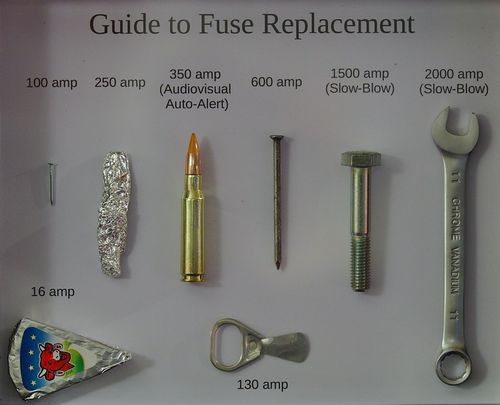
Strongly suspect some engineer included a 'weak' conductor somewhere as a sacrificial fuse. Wires tend to be way easier to replace than entire buildings. Just look at how violent aircraft jet engines are when they pop.
I’ve heard stories from my navy days, such as when they accidentally synchronized to the grid 180 out of sync (the automatic sync failed, this one wasn’t manual) and the two diesel generators ripped themselves from the hull and threw themselves across the space and destroyed several other things on the way. That was on an older ship and they decided not to repair it, so it was decommissioned.
In modern plants synchscopes are not common or nessessary. Auto synchronizers can routinely close machines into the grid with better accuracy and repeatability than human operators.
Watching this, a couple of questions came up in my mjnd:
1. Siemens rep physically touching things despite vibration sensors being in place - do they not trust the sensors? If they do not, how are they doing routine monitoring? Have someone sit atop the machine and feel for things 24/7? Or is that just the rep grandstanding for the cameras?
2. Time of grid sync only having hh:mm precision. Nitpick, but at 60hz, that is about 50s of imprecision.
3. The mentioned previous unsuccessful attempts - so went wrong? Dunno, I tend to learn more about systems from failure :)
> Siemens rep physically touching things despite vibration sensors being in place - do they not trust the sensors? If they do not, how are they doing routine monitoring? Have someone sit atop the machine and feel for things 24/7? Or is that just the rep grandstanding for the cameras?
You ever give a pair of kitchen tongs a few good clacks before using them? You know, just to make sure they're still clacking?
The building I currently work in used to have clocks that were synchronized by the power grid. The power company would guarantee a number of cycles per day. While the precision isn't always there your clocks would never be permanently drifted and that was good enough.
I haven't looked into it but the guy who sold me our current gps time receiver told me that power companies no longer offer a cycle guarantee.
A friend of mine lived in a deliberate-built uranium mining town about 30 km away from the Trans-Canada Highway. One day, it disconnected from the main grid for one reason or another, but still had power from a local hydroelectric dam.
The dam ran too slow, and everyone who relied on wired clocks ended up being 15 minutes behind in their day.
Thirty years ago I had a graduate assistantship in the physical plant of my university. One of the cool things I saw was a 55-gallon drum sized motor spin up to synchronize all the clocks on campus at noon.
It costs nothing to check. Gauges are one thing, but physical senses are good for intuition. It's no different from a racecar driver knowing their engine is underperforming because it sounds different.
If it's the first time the equipment has spun up after the sensors were installed, maybe he's just validating the installation. Maybe they wouldn't be doing that 24/7, just every month or year, the same way I don't validate unit tests constantly, only when I write them and then occasionally after.
> Siemens rep physically touching things despite vibration sensors being in place
If the rep’s touch is calibrated, then it would perturb the sensors by a known amount and should validate the sensors are not resulting a metric that is permanently wrong.
But by the 1950s, clocks with improved batteries and oscillating quartz crystal resonators began to replace consumer electric clocks that synchronized with the power grid.
That sounds a little early; mains-referenced clocks continue to be widespread into the 21st century, especially in bedside clock radios. In my experience, the ones based on quartz oscillators drift even more than mains-referenced ones over the long term.
That’s actually what the story was about. In order to have/sell a good AC grid-powered clock, it was necessary to have a consistent AC frequency. A consistent frequency was also necessary to have an interconnected grid. Solving one problem (the household clock) also made power grids possible.
I have a 1931 model school built by the works progress administration.
The school had a dedicated clock circuit one of about 5 electrical circuits. The clocks came from Standard Time Company of Springfield Mass. It has a paper tape that represents the bell schedule for the entire year. The clocks being on the same circuit kept them in sync. The paper tape rang the bells on the schedule.
The current building codes I think were fundamentally defined during this era of construction. The building is technical a Modernist building as it steel structure with brick veneer walls.
The building was very original when I got it and I have tried to maintain that as much as possible. I have insulated based on guidance from Building Science Corporation. I'm in New England and we have been getting by using air sourced heat pumps. I have a 40kW solar array to offset energy costs and fiber to the building.
And not a single mention of where he built the Telechron factory. The first and last, I believe, was built in Ashland, MA.
Recently, they put up a nice commemorative light-up sign and lit up the old clock tower too.
Hey, cool! I just finished restoring a Telechron Master Type B clock, and here is a story about these Telechron master clocks on HN. It's very satisfying to watch the large hand bounce back and forth at zero when the mechanical movement and the electric rotor are perfectly in sync.
I see in the Telechron ad in the article that they are based in Ashland, MA. Ashland cites as their claim to fame that they are where the electric clock was invented and last time I was there there were signs to that effect at the town border.
"The adoption of digital clocks sealed the deal" (of clocks no longer counting power line cycles). But did it? My impression is that for decades, digital clock radios did that just that.
They still do. See below how the European grid ran a little slow, causing all the oven clocks to fall behind. This was corrected by running the grid slightly faster, to move all the oven clocks forwards again.
Interesting. Completely clueless in this domain.. is the wording of "returning energy back to the system" reflect reality? Is that because I was out of sync or because of the previous unmet demand? Or is this just fundamentally how it all works?
That's exactly how it works! Grid frequency is determined by the speed of all turbines connected to it. They lost a bit of inertia due to energy being taken out of the system (higher demand than supply of power), so they slowed down, the grid frequency lowered and clocks started running behind. To get the frequency back, gotta generate a bit more energy to speed all the turbines back up.
This article is wrong, or at least the headline and intro is wrong.
You don't need a precise time source to make power grids possible. You don't need any time source at all, as generator operators simply synchronise with the grid's current frequency (and phase) before throwing the switch that electrically connects the generator to the grid. And once the generators are connected, they are automatically locked to the exact same frequency and phase. It's not possible for them to fall out of phase without the electrical connection being broken (If you try to force a generator out of phase, it will draw more current trying to get back in phase and will eventually blow a fuse)
For engineering reasons, it's useful to keep the frequency within a few percent of a standard, but for most purposes, it doesn't matter if the grid is running at 58Hz, 60Hz or 62Hz and you can achieve way more accuracy with crude mechanical governor. Many simpler backup generators use nothing more than a mechanical governor to maintain their frequency.
The primary reason why power grids used accurate master clocks is actually the secondary reason that this article mentions: Automated time synchronisation.
This predates the days of modern quartz clocks. It was possible to make very precise mechanical clocks (especially for navigation use), but they were impractical and too expensive for every day use. The average clock or pocket watch would gain or lose several minutes per day and required constant manual adjustment. Loud bells ringing each hour would allow a town or small city to keep the same time, but different towns would be out of sync with each other.
There were various competing solutions at this time. Clocks would be synchronized over long distances with time signals transmitted over telegraph or radio. Paris actually had a network of pneumatic tubes that drove synchronised clocks driven with a pulse of air every minute: https://www.amusingplanet.com/2022/02/the-pneumatic-clocks-o...
But the power grid neatly solved this problem.
Not only did it distribute power, but it distributed a synchronised time signal across the entire nation. Your complicated mechanical wall clock could be replaced by a simple electric synchronous motor that drove the clock hands and it would keep perfect sync with every other clock on the same power grid.
All you needed to make this useful was a single master clock that kept the power grid running at exactly 60Hz (well, it actually drifts as load varies, but they deliberately vary it so there are exactly 5184000 pulses per day).
This time keeping service that power companies supplied as a secondary effect of their primary purpose was typically mandated by government regulations, as cheap and accurate synchronized time is a boost to the economy.
That’s not correct. The frequency provides an indication of how much power is being drawn. If the frequency is low then generators supply more power to bring it back to 60 Hz.
If there was not a well known fixed frequency it would be impossible to evenly distribute load over power stations. All generators have a %load vs frequency delta curve built into them which is precisely calibrated.
The frequency does not provide an indication of load. The frequency can be 60.00Hz with 20,000 MW load in Ontario or with 10,000MW.
Changes in frequency provide a measure of changes in the balance between generation and load.
The generator’s prime mover’s governor has a droop function set so that typically a 5% change in frequency will result in a 100% change in output. This is how most generators on the grid arrest changes in frequency, but they would not restore the frequency to 60Hz. The droop allows for a steady state frequency error.
A handful of special generators are used to restore the frequency to 60Hz or balance the generation and load in an area.
The precise frequency does not matter, if one generator thinks the frequency is 59.99 and another thinks it is 60.01 their outputs will only be a little higher and lower than their load setpoint. It does not matter if they share changes in load perfectly evenly, so long as generators on the system in bulk respond according to their capabilities.
Yes, they use the frequency as a common signal to respond to changes in load, that is correct.
With gps synchronized clocks and high speed waveform measurement we can see the propagation delay in the frequency across the country when there is a big event. Pretty neat!
That first link seems to talk about voltage swings, not frequency changes, doesn't it?
I do understand that the loss of rotating interia in the grid generation mix is a concern long-term. (See concerns from a report like https://www.osti.gov/servlets/purl/1854457 ), but I hadn't seen any charts showing that we were less frequency stable than in decades past.
I don't get how the latest inverter from Enphase is a specific solution. What does the IQ8 do to help grid stability? I'm legitimately curious. I know many inverters do some kind of frequency -control for curtailing power output, is that what you mean?
Is it actually worse or do we just have a different standard for "good job"?
The AC clock on my oven definitely drifts by a couple minutes every once in a while, but it's a lot better than the mechanical clocks I remember as a kid. Yet it's still good enough that I've never seen my UPSes report anything other than 60.0hz


As an example, imagine a frictionless generator with no load, spinning at 60 Hz. The rotating mass of the generator stores kinetic energy, and its windings are ready to convert that to electrical energy. Attaching an electrical load slows the rotation unless something is done to replenish that stored kinetic energy.
On a larger scale, loads are switching on and off all the time. Power plant operators need time to react, because adjusting the throttle isn't instantaneous. A natural gas generator might take seconds to throttle up or down; adjusting a nuclear power plant could take a while. In the meantime, energy is drawn from the buffered kinetic energy of every generator on the grid. They are all rotating in sync because every generator is also a motor.
The frequency of the grid is the signal everyone uses to know whether generation matches consumption, averaged over second or minutes or hours.