I’m not sure how this visualization is better than the hydrodynamic visualization, but it’s worse in one very important way - it uses “rotation” as a metaphor when angular momentum and spin are already very important. It would be hopelessly confusing to learn this metaphor (which has nothing to do with spin) and then try to disentangle it from your mental model when learning about spin later on.
More importantly, I don't understand what this model is trying to conceptualize.
The hydrostatic analogy helps a person understand the difference between voltage and current. But its real power is it gives you the building blocks that lets you understand more complicated behaviors by analogy.
Take power in the P=I*V sense. Pretending it's water, we can see how a supersoaker nozzle (ie high voltage, low current) is kinda moving the same amount of water in a unit of time as say a soda bottle tipped on its side (ie low voltage, high current). With the hydrostatic analogy, I can see how high voltage and high current are two different "things", AND I can extend those analogies to see how they explain additional concepts like power. That's a great mental framework! Now that I understand the basic dynamics and feel comfortable moving into the land of mathematical expressions, we can take off the training wheels and start talking about the really abstract stuff like capacitance.
On the other hand, I'm not sure what is the explanatory power of this "meshing gears" analogy. If you were to use this to explain electricity in say a high school physics class, what concept or insight does it help me grasp?
That electricity can be explained with atoms! And not the kind of bohr-model atoms that are thoroughly debunked (electron bead flying around nucleus magically). If we treat them like gearing shells, as chemists have for decades, we can provide a model of electricity that is consistent with quantum mathematical descriptions of the atom's shape and motion.
If you're the author, you should make clear who your audience is. "Demystifying Science" and "How to Visualize Electricity" imply a general high school audience... this sounds like it's specifically "How to Visualize Electricity for Quantum Physicists." Perhaps start off by stating some quantum formulas or misconceptions that aren't well served by the hydrostatic analogy but your analogy helps explain better. If I don't understand that framing, I'll know right away "ok, this is for a grad-level understanding, not high school."
Not saying this is bad work, it's just very niche work where people outside the niche won't really understand the point or appreciate it. Know your audience, and present appropriately. It fell flat to me because I was expecting it to be something that apparently it is not.
Thanks. There is no reason why high-school or younger children can't understand the basic modern conception of the atom. We hope to bring that down to everyone's level.
Physics should start with objects. So we start electricity with atoms, unlike the traditional analogies.
I feel like the hydrogen atom model (the rendering model) is ambiguous, which makes the rotation ambiguous
Also, I feel like you have to have a good grasp of symmetry and rotation to grasp the thought that they rotating in different directions - the top part of the thing, closest to the viewer, is going right for both of them. Why is that counter or clockwise? Thank God I took quantum chemistry and think I know what they're going for.
You have to view each terminal on its own terms: when viewed from above, each rotating atom at the end of each terminal is rotating oppositely (-/+ charge)...this means when you bring them together they coincide.
Yeah, I understand that they are mirror images of one another and their rotation ends up being complimentary
But if someone is at a very introductory level and doesn't know anything about rotational symmetry, the point that the terminal ends are rotating opposite directions may be confusing.
The transparency of the render models might lead to someone hearing that point about opposing rotations, stare at those rotating terminal ends, and then have something like the rotating mask illusion (https://m.youtube.com/watch?v=sKa0eaKsdA0) cause them to see that the terminal ends are visually rotating in opposite directions, rather than it being just in relative terms. I was able to do this on purpose with the faster-rotating negative terminal, and its rotation is genuinely kind of ambiguous at the scale I watched the video.
These aren't criticisms of the method, just a couple of points about the video that might pose some conflict with someone who is at a very introductory level.
I do like the idea generally. It's always fun to see new analogies for stuff.
aha i get your point exactly. Yes, i'll see if i can't address those for future vids. Unfortunately youtube doesn't let you update vids so i'll have to include those points in the next vid on magnetism. thank you!
If it were me, I'd probably have the camera fly down to between the two terminal ends (don't cut, so the viewer understands what's happening). Then, turn from one terminal and shoe the rotation with an arrow, then rotate and turn to the other and do the same. Maybe mention that they're mirror images, so the rotation coincides.
Obviously not a dictate, but if I were trying to explain it to my chemistry freshmen that is how I would do initially.
It might be useful to seek out some non-expert boards that help undergrads in physical science or engineering to see what they think!
Good luck! I'll bookmark your stuff and ref it to some EE people.
I had similar problem. I understood how it should be from the picture but "opposite" made me think there is some phenomena there. I had to look closely to debunk it.
Spin and angular momentum are the same physical quantity - their sum is conserved, but not each on its own. Spin just seems to occur in SU(2) rather than SO(3) if I remember correctly.
it is impossible to deconvolve speed/direction in terms of momentum of the electron, so we simplified the idea with rotation speed. Ideally, the high charge atoms would be more cohesive as well as faster.
I'm out of my depth now, but wouldn't this have the same issues in a rotating frame of reference? Surely, if position/direction is conflated, then rotation is too, no?
You have to really look at the Heisenberg uncertainty relation.
Position cannot be sharply determined if we know direction (angular momentum). Speed is problematic too. The state of an electron (or electrons) in the atoms isn't an eigenstate of the velocity (or speed) operator, so no way to nail down the speed precisely.
That being said, we chose to abbreviate momentum with rotation speed for our visualization. Reality includes coherence of the shells. They must effectively rotate together to produce coherent momentum and force the other terminal.
Thanks for linking that spin paper earlier - I'm reading it and it's interesting.
With respect to uncertainty of angmom vs position - I would expect the pontryagin dual of angmom (which would be affected by the H.U.P.) to be angular density distribution, not "position" as such. Do you have any information on this relationship?
Also, do you know what the energy eigenstates of electrons in the fermi band look like, and how those relate to velocity eigenstates? As I understand, fermi band electrons that carry electrical current are usually not bound to atoms, but in a much wider (space basis) state, which I would expect to be closer to momentum/velocity eigenstates.
Also, how literal are you claiming the OP is? I've never heard this "gearing" analogy before, and I'm wondering if it's highly metaphorical or if this reflects some actual physical process I'm just not familiar with.
Density distribution can be transformed to position with spherical shell slice processing from what i understand.
This visualization is an interpretation of all of the math we could get our hands on. Hopefully we get closer to what the atoms are actually doing. Quite literally, electron volt can be considered momentum, so we did our best to illustrate this...simplifying it to rotation speed. In all cases, we are trying to get closer to what the physical object atoms are doing to provide for the phenomenon.
For instance, ionization means delocalized surface of the atom in this illustration because we can't imagine the electron to be a bead that flies around magically and moves through the wire providing motive pressure, per se. So we use shell gearing instead as a rationalization that fits the math and makes more intuitive sense.
Our belief is that QM is absolutely correct in its descriptions but lacking in its interpretations. There is a lot of woo out there because of this.
If you know any other QM experts that would be willing to help us develop the model further, that would be great- can you PM me through the website?
Why? Metals are addressed at the end of the video. Metals can be thought of in the same manner except with complex orbitals that host multi-polar contacts with neighboring atoms.
Molecular orbitals are a useful tool when studying, well, molecules. But, it is a simple model that doesn't capture the full complexity of reality. In particular, it doesn't work at all for metals.
Imagine the following simple case : A AC generator connected to two capacitors in series. Signal --||----||-- Ground . The voltage potential at the middle : In your analogy there is no reason for anything to turn as the electron wave are discontinuous inside the capacitors (there is a huge gap in the order of micrometers between each plate of the capacitor).
The main important thing of electricity is the Electric field not the electron field. The electric charges get pushed around by the electric field. Each of these electric charge carry with it its Coulomb electric field. Sum contributions of every charge and you have the local electric field.
In fact even more fundamental is the electric potential which you can take the slope to obtain the electric field.
We can do A/c with the shells rotating back and forth. The micrometer gap is not a problem for the surface of the atom, which can extend indefinitely.
The electron is simply an excitation of the electric field in QM, so one does not come without the other.
Physics is the study of objects that exist, and so it's important to begin with objects in a visualization. Fields are a concepts that measure the location of something happening. That something is the surface of the atom.
>electron is simply an excitation of the electric field in QM
I am not a physicist but I think here is your mistake.
The electron is an excitation of the Electron Field. It's matter aka fermions.
The electric field are bosons.
Those are two orthogonal things. You can have one without the other (although the fields are coupled).
The point I'm trying to make, is that there are light fields, and matter fields.
Those are two distinct independent things (that can eventually be coupled).
Electricity is mostly a light phenomenon.
With the fields everything happen locally.
If I recall correctly, one of Faraday main discovery was displaying the lines of the magnetic field using metallic powder. Showing that fields were "real" things.
Two electrons don't interact directly with one another. It's more electron interact with photon which then interact with another electron. The one case where two electron interact directly with one another is the Pauli exclusion principle to make sure electron don't find themselves at the same place.
When in doubt follow the energy.
You can store the energy as bumps in light field aka photons (E^2+B^2 (eps0=mu0=c^2=1) ).
You can also store the energy as bumps in the Fermionic field : sums of kinetic energy of electrons.
Finally you can store energy in the coupling between those two fields. But this happen only locally.
At first approximation when dealing with electricity problems what matters is the energy of the electric field, not the kinetic energy of the moving electrons.
Faraday believed his 'fields' were what some sort of actual objects were doing. He called them tentacles IIRC.
In our initial atom at beginning of the vid, the electron has tentacles based on Faraday to account for the tails of the RDF of QM — the indefinite extension of the shell. These will be important in visualizing the atomics of light and gravity in future vids. We ignore them for the circuit because they would obscure the events, but the tentacles remain!
At the extreme electricity works just fine without the electrons. Take two hydrogen nucleus without any electrons (aka proton H+). Throw them around and see where they interact and land.
They experience electrostatic repulsion, no electron cloud required.
Local classical Maxwell is enough to explain electricity no need for QM.
I think I get what you are trying to do : "making the Light field implicit".
It's a tempting thing to do because when things are coupled we are kind of thinking : is it the electric field which deformed the electron cloud or is it the electron cloud which generated the field.
But this picture is dangerously misleading. It makes you assume strange electron cloud which interact non locally in complicated way (strange arms...). By giving special properties to the electron it doesn't respect the symmetry with respect to charge. Maxwell works just fine for protons. It also completely obscure the facts that we can have external E and B field ; in particular it makes you think that photons need matter to exist which isn't the case.
It is much more clear and general to make light fields and matter fields explicit.
"Light is the way to exchange momentum between charge carriers".
First atoms are neutral, while light affect can only charge particles.
The atom is a composite of a positively charged point-like nucleous, and a negatively charged cloud-like charge density. This complex dance duo, can store energy in between them. Those are the bound states of the electron, but that's not the matter of electricity but chemistry. In electricity, this dance duo can store energy in its surrounding by deforming its electron cloud to become an electrostatic dipole.
Transaction is the wrong picture to have when we are dealing with electricity. The continuous picture is a lot better.
The momentum of an atom is a continuous quantity. At every moment in time it can be exchanged locally in continuous amounts. Both the positive nucleous and electron cloud are taking from the field and giving locally to the field.
Photon is kind of a confusing term because you have to distinguish between the virtual photon which mediates the coulomb interaction in a continuous way, and the real one which can go on its way, or be absorbed/emitted by atoms provided that the electron cloud can deform in such a way to account for energy conservation during the collision.
To see the distinction take the previous example of two protons H+ going towards each other then away. The trajectory to have in mind is they are following a perfect curves trajectories, and not a sequence of straight lines occasionally changing direction when the photon transaction happen. Those typical QM like trajectory you see in cloud chambers need the energy to become bounded in some discrete way. For example electron fly straight, real photon hit and is absorbed and atom change direction to conserve momentum and the electron jump to a higher orbital to conserve the energy (the energy is bounded to the atom for some time), the electron keep flying straight, then it emits a new photon and change direction. These kind of trajectories happen when the energy can only bounded in discrete quantities, but that's a matter about QM, and not electricity.
Finally clarifying what that the light field is carrying in : momentum, and making clear that the light field doesn't carry electric charge.
Honest feedback, this didn't really explain electricity for me. What is does is introduce an entirely new analogy for understanding electricity. Unfortunately, most elements of the new analogy are not relatable at all, meaning the analogy has no value. What do I care that the electrons "rotation" means charge and the speed means voltage? Why are they shaped like breathmints, how does that help if they are supposed to be gears?
At least the water and beads analogies help, because they are something I have a previous understanding of.
For what it's worth, I enjoyed the music and the typeface. Made me hang onto watching the video much longer than I would have otherwise. The VO is also good.
The ticking beads don't really move but transfer energy to each other. That's maybe a more useful analogy than the notion of beads or water moving through some pipe.
I'm not a physicist of course but I get that what was explained to me in high school (many decades ago) was probably a bit of an oversimplification. Ticking beads lose some energy as they smash into each other. Hence thin wires heat up and glow.
This is probably cringe-worthy enough for anyone who actually studies this for a living; so I'll stop right there ;-)
I understand electricity reasonably well, but that video has left me very confused. Multiple watchings didn't help.
The first issue is I don't know what is real and what is metaphorical. The hydrogen orbitals are real? Are they squashed like that?. But the rotations are entirely fictional? Or do they correspond to electron spin? Do hydrogen atoms really share electron clouds or is that a metaphor?
Several specific issues: Ionized hydrogen doesn't have an electron, so what is the electron cloud. The ends of the wire rotating clockwise vs counterclockwise: the wires are pointing opposite directions, so the opposite directions cancel out, and they are rotating the same direction? Making a wire of single-file hydrogen: is that even theoretically possible? How is there drift velocity when the atoms are just rotating in place?
I understand that voltage is represented by the rotation speed in this model. (Is this different from momentum?) But what is current in this model? Everything was spinning when the circuit was open, and everything is still spinning when the circuit is closed.
What "level" of electricity is this model supposed to explain? It's discussing circuits, but I don't see how this model helps one understand why you need a resistor when connecting a LED to a battery, for instance. The resistor reduces current, which is not spin but propagation of an impulse? Or is the model supposed to help understand electric fields and stuff? (How would this model even explain an electric field in a vacuum, where there's nothing to spin?) Or is it intended to provide insight into what's happening at the quantum level?
I don't want to be critical, so hopefully these comments are constructive.
Thanks for your comment. Yes, this model hopefully incorporates more of 'what is real' than the alternatives.
The hydrogen orbital, for example, is approximately spherical/toroidal, which matches the radial distribution plot of QM.
Ionized hydrogen has a delocalized electron; it is not gone — but rather elsewhere. In our model it is enmeshed with the others in the column.
Speed is used as a surrogate for momentum because QM doesn't allow us to deconstruct the speed/direction from the momentum separately. Ideally we could illustrate a more cohesive motion as well as faster for greater momentum.
Current is transfer of motion from the high-momentum, high-V, shells to weaker ones.
I have briefly discussed resistors and other elements of circuit in other threads here. Check it out and let's talk there.
Concerning your comment about vacuums, we have to understand that there truly is no vacuum. We assume that when atoms are isolated, their surface pressure is decreased such that they can occupy tremendous volumes. Currents in outer space are present with 8.49×10^-23 atoms per 10 cubic centimeters.
Hopefully we can move toward capturing QM, and ED descriptions of electricity. A magnetism video will follow soon.
In case the author of the video reads this: I tried to watch it but after 2 minutes I just had to turn it off as I couldn’t handle that music anymore. It’s extremely distracting when you try to listen to what the narrator is explaining. It’s not that I don’t like background music in explanatory videos, but this music is way too loud and complex to not distract.
Also, considering the video is uploaded to YouTube, I would remove the moving white “stars” in the background. The model itself is very detailed already, which makes it noisy after running it though YouTube’s compression, but the moving stars cause there to be even less bandwidth available for the visualization itself, resulting in more compression artifacts.
> It’s not that I don’t like background music in explanatory videos
And I'm totally against it. It is always distracting to me. If I'd want to have background music I could play it myself, and it would match my choice. The only videos that should have background music is where the music is in any way an important element of the story, e.g. if the topic is the work of an artist or composer. Otherwise, it is distracting.
Fwiw, another user experience report: I managed to overlook the existence of the video, until seeing it mentioned here in comments. A white video arrow, overlaid on the white center of the poster image. My fuzzy recollection is I classified it as a decorative title graphic, as I skipped past it while reading.
Apropos visualizing atoms and their electrons, here's a fun sidebar. This IBM video[1] was made with an STM scanning tunneling microscope, which sees outer electrons. So while it shows the IIRC carbon monoxide molecules, standing up like buoys, as little balls, the background copper surface of delocalized electrons looks smooth, with ripples. You can't see the individual copper atoms. But if you instead used an AFM atomic force microscope, which can feel inner electrons, then you could - here's one of silicon[2].
When crafting and teaching abstract representations, it's easy to forget that these are real physical objects.
It's clear that a lot of work went in to this video and it's hard to hear criticism, especially of a labor of love. At the same time, I'd really like to see better analogies used for electricity, and that's going to require some very high quality work to replace the ones currently used.
The background music was quite bad and distracted a lot from the dialogue. (While I personally usually like the sound of bagpipes, most people seem to hate them, so that's an especially bad sound to use.) The background music is tonally too close to the speaker's voice, so the two together sound like the speaker is having to compete with the background music.
The constantly-shifting background and the nonstop fluctations of the hydrogen atom both also distracted from the core concept. Especially because the starry background kept changing direction!
The video uses vocabulary that isn't going to make intuitive sense to novices. Examples: "radial distribution function", "quantum jumping", "drift velocity", "multipolar contacts".
The clockwise-vs-counter-clockwise rotation thing never occupies the same frame in the video, so the watcher is expected to keep track of this mentally. Some people really struggle with that.
The advantage of other models of electricity is that they relate it to things that many people have experienced. This model is much more abstract. Abstract can be okay, but you should show reasons why the abstract model is better than the more relatable models. What's wrong with the other models? You say, "For example, it has some serious advantages over the traditional visualizations like the 'electron bead flow' and 'water-pressure analogy'", and you kind of describe one flaw of each of the two other models, but you don't describe why, in practical terms, this is problematic for understanding electricity. Like, okay, the Bohr model doesn't match the reality of probability clouds and quantum effects, but how does this impact simple circuits?
I found that the first half of Feynman's QED did a pretty good job of trying to explain quantum behavior in more abstract terms than the traditional approaches to light-as-wave-and-quanta. I'd also recommend looking at videos from 3blue1brown on YouTube for some ideas on how to present abstract concepts to viewers without breaking the bank on production.
The primary problem with the other analogies is that they don't use real objects. Physics is the science that studies objects that exist, after all. That means we can't be crashing concepts into one another (like charge reification, for instance). It's important to begin physical explanations with objects instead of concepts, so we advance the atom.
While this depiction of the atom isn't the end-all-be-all atom, it's a step in the right direction, hopefully.
Analogies are needed to grasp concept and allow to do predictions. This visualization was meaningless for me. I can't predict what will happen if we make three point connection with different potential for example.
I used to use a gravitational field analogy when teaching Secondary school physics.
Electrons are equivalent to "balls" with mass. Potential difference equates to a gravitational field (which most people seem to intuitively understand from experience). Balls can roll down slopes of different gradients, and therefore at different speeds, which is analogous to current and resistance.
As physics it's wrong. There is an existing QM explanation for current flow in solids, attributed to Bloch and dating back to the late 1920s. It doesn't work like this visualization. For example in this visualization the electrons aren't transported anywhere, they just sit in place and rotate. That's misleading. In fact charge flows.
I worry about using an incorrect physical picture to visualize physics.
Because charge is rotation in this visualization, we can also say that the charge is moving since the speed of rotation propagates after the circuit is closed. This is a patent reification, of course, but the idea is consistent with QM.
Aphysically-high-speed particle tracks are used to represent wind.[1] I wonder if one could play similar games of colorization and expressive particles with electric circuits? What might one do with AC?
My mental image (fwiw) is that the push of an electron is able to push electrons both in immediate proximity and to electrons at a distance. So, that allows the relatively slow speed of moving electrons to produce nearly light speed changes in momentum of faraway electrons.
Nice. And this is in contrast to pushing water (sound wave), where the wave propagates only at the speed that molecules bump. Like, if I'm in a big line, and someone pushes at the back of the line, I only get pushed by the person immediately behind me. An electron is able to be pushed by electrons at the back of the back of the line. The electron immediately behind an electron will push hardest, proportional to inverse square law. But when there are twenty electronics behind, and the very last one pushes, it has a decreasing effect on all electrons in front, but at time 2, those movements allow propagate forward, etc etc.
Wish I could visualize that. Oh yeah. Ha!
I like you spindle representation of inverse square law.
I hate to rain on your parade, because I'm deeply interested in alternatives for established models, and as a rule I strongly prefer intuitive visualisations over mathematical wankery, but this is just... nonsense.
It has nothing to do with electricity in any sense. There's no matching theory that this is visualising.
To begin with:
1) This doesn't explain why in general only metals conduct electricity. You used the example of Hydrogen, which is a nonconductive gas. It might become metallic under certain circumstances, but nobody has a firm grasp on exactly how that works! Using the conditions found only in the cores of giant planets for a "simplified" example is absurd.
2) This doesn't explain why capacitors build up charge (literal excess electrons on one plate, and missing electrons on the other plate.) That is, your theory inside the wires has to also mesh well (heh) with what happens outside the wires, such as the buildup of static electricity.
3) It doesn't explain how electrons conduct electricity through the vacuum, where there are no atomic orbitals.
4) It doesn't explain how rarefied plasmas conduct electricity, where for the majority of the time atomic orbitals are not in contact.
5) It doesn't explain other types of current, such as charged fundamental particles in cyclotrons.
6) You haven't explained how batteries produce the rotations.
7) You haven't explained how dynamos produce the rotations.
8) You haven't explained how resistors, capacitors, and inductors work in this model.
9) You haven't explained how the rotations produce heat, light, or any other useful work done by with electric machines or with electronic devices.
10) You said that ionised hydrogen atoms are required for this to work! But they are just isolated protons. They have no electrons or electron shells!
11) This is actually a flaw of other models too, but I'll throw it on the pile: The infinite extent of the QM electron field is just a simplification of the QM mathematical model. Clearly, this is physical nonsense. A hydrogen atom can never have an electron orbiting it meters away, or light years away. That's just gibberish.
12) And the final nail in the coffin: You'll find that in general an extended 2D or 3D grid of gears will often get "locked up" and cannot transmit rotations. This is practically a meme at this point: https://www.reddit.com/r/CrappyDesign/comments/2hwwy0/those_...
For comparison, the liquid flow model is actually relatively accurate in terms of representing what's really going on (electron fluid flowing freely), and is also intuitive.
1) Resistors are like an constriction of the pipe. Flow is allowed but impeded.
2) Capacitors are like a wide section of the pipe, but blocked by a rubber sheet. Bulk flow through a capacitor is not possible, but vibrations can be transmitted.
3) Inductors are like a heavy propeller in the flow. The propeller resists flow while it's being "spun up", but then it no longer resists the flow when its speed matches the flow. If the flow in the pipe is reduced the momentum of the propeller provides pressure to keep the liquid flowing longer than it would have otherwise.
4) Transistors are like a soft rubber section of an otherwise inflexible pipe surrounded by a container with an input. Pressure in the container squeezes the flexible section and prevents flow through the pipe.
Hydrogen is a great place to start with electricity since there is only one orbital surface/ electron-shell. The principles are easily generalized to the multipolar surfaces of metals. Metals are conductive because of these unique d orbitals. In general they have unpaired electrons, which means charge on balance.
"To begin with"...
1) these are ionized hydrogens with delocalized electrons.
2) Capacitors build up voltage, which is differential rotation of their metal's e-shells.
3) In the vacuum, there is such low pressure on the atoms that their surfaces expand to fill the void. There is no such thing as a true vacuum. This is also how cathode ray tubes work under this model.
4) See above. The orbitals are in contact.
5) All those cyclotron measurements are electric at the end of the day.
6) Batteries charge the terminals electro-chemically. chemistry will follow in an additional video after magnetism. Basically, it is the same concept. Enmeshment of surfaces.
7) What dynamos?
8) All materials resist current to certain extent; this has to do with how conductive they are, which is a direct result of how their orbitals are configured/ how the atom is shaped. Capacitors are just terminals separated by insulating resistors. All these details deserve a follow-up blog at some point for sure. Thanks.
9) light is coming. Heat is chaotic motion, while electricity is a particular rotatory type. heat also involves translation/vibration in addition to shell rotation.
10) Hydrogens that are ionized are not empty protons, they simply have delocalized shells.
11) We don't think the limitless extension of the electron is mathematical gibberish. We think that those structures are essential to other atomic phenomenon, including light and gravity. videos to follow.
12) the locked up gear thing isn't a problem for the multi-polar orbitals of actual metals. It would be a problem for a hydrogen lattice, unless it had a hexagonal crystal, with bent geometry...hm.
It is an insulator, so a terrible place to start. Simplicity doesn't help if it's oversimplified to the point of being totally wrong.
> In the vacuum, there is such low pressure on the atoms that their surfaces expand to fill the void.
I don't think you realise just how absurdly distorted the orbitals would have to be for this to make sense. The gap in a classic Leidenjar capacitor is about 1mm, or something like 4 million times the inter-atomic spacing. You seriously want me to believe that the surface atoms have electrons whizzing out to orbits shaped like a 4,000,000-to-1 ratio ellipse and then coming back to whip around a specific nucleus? You're... kidding, right?
> All those cyclotron measurements are electric at the end of the day
What I mean is that cyclotrons have individual, loose particles circling around. Like isolated electrons, muons, protons, or whatever. They're not atoms, but there's a definite current that you can measure in Amperes. The beam makes a magnetic field and everything. How does your "atomic orbitals meshing together" explain currents that don't involve atoms!?
> Batteries charge the terminals electro-chemically... Basically, it is the same concept.
The same concept as what? You haven't explained how chemicals can produce the electron shell rotations.
> What dynamos
It's another word for generators. How does an AC generator generate your current? Use equations please that predict the output current using numbers based on the geometry of the coils and the rotation.
> All materials resist current to certain extent
That's just plain false, superconductors exist.
> All these details deserve a follow-up blog at some point for sure.
They deserve treatment in the first post, the first paper, the first video. It's like saying "I've got this wonderful idea for fusion power! The actual fusion and power bit I might cover later, I'm going to start by waffling on about how the vacuum chamber has no air in it."
> Hydrogens that are ionized are not empty protons, they simply have delocalized shells
In no way is this true. You can separate protons from electrons and move them meters apart and they'll just sit there. This happens all the time in interstellar space where plasmas can have mean inter-particle distances measured in meters. There is no meaningful way in which you can point at a particle in one room and say that it "belongs" to a particle in another room and that this makes up a hydrogen atom.
> We don't think the limitless extension of the electron is mathematical gibberish
Mathematically it's perfectly fine. You can define fields however you like. Infinite extent, infinite precision, infinite whatever you like. The physical universe just doesn't work that way, there are no known physical infinites.
> We think that those structures are essential to other atomic phenomenon, including light and gravity.
If you can solve the problem of gravity, you can collect your Nobel prize. Unfortunately you have to start with baby steps, such as explaining how capacitors work without hand-waving. Use numbers. Run a simulation or two.
> the locked up gear thing isn't a problem for the multi-polar orbitals of actual metals. It would be a problem for a hydrogen lattice, unless it had a hexagonal crystal, with bent geometry...hm.
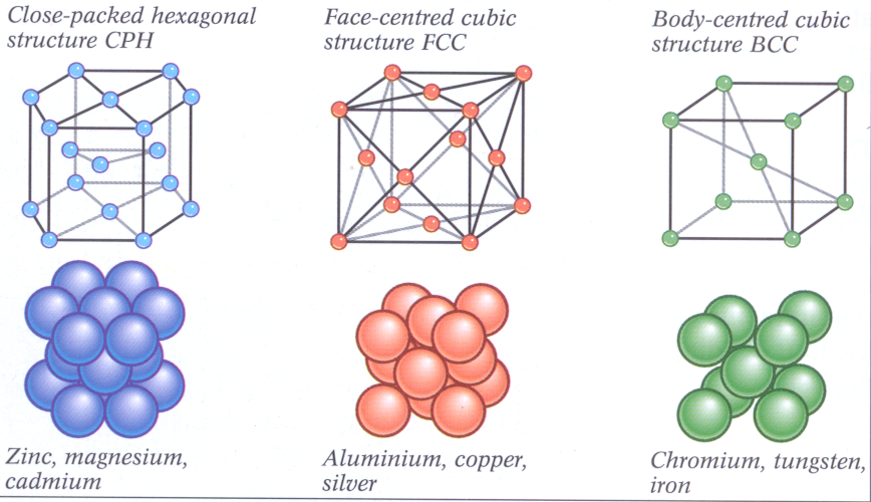
The close-packed hexagonal structure cannot transmit rotations in the sense of enmeshed gears, because it's made up of a bunch of triangles! Last time I checked, zinc, magnesium, and cadmium are all conductors.
Again, with actual metals, the "polar" orbits don't participate in conduction. Loose electrons do, and they don't mesh like gears. They can't possibly, because hexagonal lattices still conduct electricity.
Not gonna dignify your ad-homs..but aren't u the troll here? Last meal for you: the model is perfectly compatible with all of maxwell's equations and basic QED. This is an illustration not a new theory.
Yes, ionization is interpreted as thinned, extended outer surface of the atom (e-shell). No physical reason it cannot fill a room if depressurized sufficiently.
Otherwise, show me a single electron. And then use it explain the concept of charge, not quantitatively but mechanistically. What other than magic holds it in it's path?
Until then, ionization is delocalized surface of the atom because that's the only way to rationalize the idea with physical objects (aka the atom), which physics ought start with. It IS the study of objects that exist. If you consider ionization this way, it clears up the rest of your concerns & I will happily walk you through the details. If you're not willing to take that interpretation we have nothing more to discuss, eh?
> perfectly compatible with all of maxwell's equations and basic QED. This is an illustration not a new theory.
You may have misunderstood a few aspects of QED. It is true that the U(1) field of QED and gauge theory says that there are "little circulations" that explain all known electromagnetic phenomena, but this is at a completely different scale than electron orbits, and doesn't require atoms in general.
For a post about visualization, there are surprisingly few graphics in the article. Perhaps they want us to read and visualize, but I was disappointed to be frank.
Thanks. Yes I think those are great questions that the model (shell-shell contact momentum transfer) can address. All aspects of the existing mathematical description can be built into the shell-contact model but will require serious updates to our animation skills. That being said, I hope we can accomplish those details later. Magnetism, light, and gravity are next on the list, however.
Resistance is inability to conduct; so orbitals are not charged (with a CW or CCW cohesion) on balance. Electricity acting on these non-polarized surfaces leads to heat.
Capacitance has to do with the induction of voltage during separation by an insulator.
Electron spinning is a bit of a simplification; the real concept is angular momentum. In reality it is impossible to deconvolve the contribution of speed and trajectory from momentum. Ideally instead of fast rotating shells as charged, we should animate cohesive motion as well as speed, but that is beyond our present abilities.
Wait, that paper discusses how the spin and magnetic moment of a single electron arise from energy in the electron's wave field. Where does the paper connect these ideas to the flow of electrical current? Does current really depend on a "spinning" electron interacting with the spin of a neighbouring electron? (I thought that'd only come up in explaining magnetism.) Is quantum mechanical spin necessary at all to understand classical current flow?
On first read, the mental model of atomic-scale gears meshing and turning at different rates (does direction matter? How do you think of amperage in terms of rotating shafts made of meshed gears?) more fraught with simplifying assumptions and unnecessary epicycle-style complications than the conventional hydrodynamic model.
The idea is that transfer of momentum between atoms is a good approximation of current. In that sense, the difference in shell momentum, on average, can be thought of as potential or voltage.
Like the hydraulic analogy, this visualization is to help us understand not an exact movie of what's happening. Math may be better for that level of detail, for now. This visualization uses atoms, which is the main advantage over the hydraulic.