Here's a proposal for fixing this. I'll use the national parks as an example.
Yosemite is hugely popular and we need to find some just way to limit the number of people going in. There are three ways to visit Yosemite. PATRON ticket, MERIT ticket, and LOTTERY ticket. All are non-transferable.
The PATRON tickets are auctioned off. This raises a huge amount of money to maintain the parks and make the other tickets completely free.
The MERIT tickets are earned by visiting the less popular parks. You get park-points and eventually you earn enough to earn access to the really cool stuff. And you've also learned to appreciate what you're going to be looking at. If you've climbed some of the less popular climbing spots in the US, it should be easy for you to get access to half dome.
The LOTTERY tickets are free and open to everyone. Enter as often as you want. The lotteries are far enough out that you'll have time to plan around winning.
There are a lot of persnickety details, but I trust the Parks Service to be competent.
The same basic system could be used to fix basically any over-accessed place (famous galleries, Everest, Galapagos, etc). I think that everyone can get behind at least one of these principles (patronage, merit, persistence) and the vast majority of people can get behind the idea of needing the balance all three.
The problem with that is that many, if not all, people have the attitude of: that is a publicly funded good, paid for in part with my money, so why shouldn't I have access to it?
What you seem to argue for with this is the privatization of our public spaces. Otherwise how do you ensure access to the publicly funded public good? Or am I way off base with this?
As others have pointed out: Parks already have patchwork fees, lotteries, and day-pass limits. This would just be a more holistic version of that patchwork.
As far as "whenever I want it" public access, I think that most parks, and even some parts of every park, would be open to car traffic. So if you're willing to pay with your time, under this system (same as under the current system), you can go whenever.
At least with parks, they are an area of conservation before they are a tourist attraction. You are paying for this land to be conserved in its natural state. Traffic to the park must therefore be limited to ensure the park is actually preserved and not destroyed by human activity. Visiting the park is a privilege, not a right. The right is that the park exists at all.
You need to watch Ken Burns The National Parks: America's Greatest Idea because the parks are to be conserved for future generations in hopes that they can enjoy the public good just as we get to.
There are still entrance fees for national parks in the United States, for example. It would just be part of the cost.
The auctioned tickets would probably still feel unfair as the rich would be more likely to enjoy the benefits of public funding. So you're not that off base.
> ... a publicly funded good, paid for in part with my money, so why shouldn't I have access to it?
This obviously doesn't apply to certain areas of police stations and other publicly funded goods. Maybe elaborating a bit more will clear up the distinction.
I have access to the police, regardless of whether or not I have access to their weapons or evidence room.
Shutting off the park limits access to a public good. It would be like the city police not responding to one part of town, and in this case (lotteries or patronage) ensures that the rich get served first. That would rub people the wrong way, I think.
National parks are not a perfect public good since they do have a practical limit on usage, unlike say, a lighthouse or clean air. Given this scarcity, a pricing mechanism such as tdaltonc suggests is reasonable solution.
I've actually won that lottery before. The process of going through it was looming large in by mind when I came up with this model. As we were packing to go, a friend of means asked if he could join. I had to tell him that there was no way for him to buy-in on joining. We would have gladly endowed Yosemite a bench to be able to join. That experience also loomed.
I think this goes against the initial concept of the US National Parks. It's owned by the people, and meant to be seen and experienced at any time.
There are days that I needed to be recharged emotionally and could drive to Yosemite Valley and sit on a rock and listen to the wind. Yes, there we lots of people, but the quiet and calm was respected and maintained.
Perhaps a better solution would be stronger consequences to those who violate trash, light, and sound pollution or those who damage the wildness intentionally.
But people need to have the freedom to visit these places on a whim.
That won't hold up when a million other people also want to go sit on a rock and listen to the wind at the same time. At least the experience, and place, will be... quite different. There are requirements for infrastructure and unavoidable damage done when visitor numbers increase. Even if you don't think we're near the point where the trade-off's too great—surely there exists such a point, right? Where access has to be limited somewhat to protect the thing being accessed?
I don't know when you were going to Yosemite, but the really cool stuff is either (1) limited access based on lotteries, (2) paved trails with trash cans, guard rails, and foot patrols. There are also small fees all over the place.
The "zero limits" model you appear to be advocating for does not exist. The "lock the gates" dystopia you're arguing against is not what I'm advocating for.
I'm talking about using a more holistic approach to access limit where access limits are already in place and having a frame work for extending access limits when and where access limits are the best way to preserve the experience.
I'll confess that my last visit was in 2015, but I've never felt crowded there during my many visits. And of course, a "zero limits" model is not what anyone wants, nor what I'm advocating.
The back country fees are for permits for camping in the back country. They are just a different kind of camping fee.
If you are just day hiking you don't need to pay a fee. The back country is not limited by anything other than the amount of work involved in reaching the back country, which varies from as little as 2-3 miles in the High Sierra portion of Yosemite or 5-6 miles from the Valley.
The Donohue restrictions were intended for the primary purpose of maintaining access to back country trails for Yosemite visitors, who were being crowded out by JMT hikers using non-traditional trailheads to get around capacity limits on the traditional JMT trailheads in Yosemite (i.e., Happy Isles).
> Perhaps a better solution would be stronger consequences to those who violate trash, light, and sound pollution or those who damage the wildness intentionally.
I like the idea - asshole tax. Littered in your own city? That's another few months wait for that vacation. Vegetarian, or vegan? Cheaper flights. It'd force people to be "pious", which would be great in some respects, but mostly police-statey...
Yosemite (and other parks) should at least limit more interior roads to shuttles. If you want to go in, park your car outside and ride the shuttle. Would cut down on the noise and pollution. (Exceptions for disabled, etc.)
Returned home recently, saw a local park / nature preserve. There are signs everywhere telling people to stay on the trail. I have never seen so many people disregard them in my life.
When I was a kid, you would go to the educational programs at the park and they teach you about the history of the area, the ecosystem, and the amount of damage that people can do to the ecosystem. Lots of locals will go through this kind of thing. But now there are so many tourists, people stomping through meadows that grow back very slowly. Feeding wildlife. Etc. How do you educate people if they’re only visiting for three days out of their entire life?
> There are signs everywhere telling people to stay on the trail. I have never seen so many people disregard them in my life.
When I went to the Falkland Islands the trails have clearly marked signs telling tourists not to leave the path under any circumstances because the area is covered in land mines. The signs had skull & crossbones on them and everything. It was very clear that leaving the path would risk life and limb.
And in the hour or so I was on the trail I saw several people leave the path to take a closer picture of the penguins. The things people will do for the perfect Instagram photo are unbelievable.
A friend of mine went to an African safari guided tour, lead by a professional, on a truck. It was extremely clear that everyone had to stay on the truck because wild lions don't give a fuck about the whole "murder is illegal" thing. From what they told me, halfway through someone on the tour noticed a rhino, and without telling anyone jumped off and started running toward it with a file to try to get some rhino horn powder (they had missed the memo that rhinos are not exactly gentle creatures) and almost got themselves killed as the guide screamed for them to get the hell back. Supposedly when they finally listened, they came back explaining they just wanted to file down a little bit of the horns without hurting the rhino.
I've seen people get far too comfy with bears before in Yosemite and with Elk in rut at Rocky Mountain National Park, but this takes the cake! Having your babys pose with a black bear is one thing (yes, really, I wasn't the only one rushing for the kids). But actually going up to an adult rhino and then molesting it's horn with a file?! I'm actually speechless, I've not idea what to make of that type of idiot. To me, that is clearly a suicide attempt.
I'm a little confused. Are theses landmines to keep people on the trail or are they left over from the war in the 80's? And if the latter, why the hell haven't they removed them yet? If it's the former, I'm impressed with their dedication to keeping the tourists on the marked path.
> And if the latter, why the hell haven't they removed them yet?
Apparently Argentina used plastic land mines (I believe they were new at the time) which are difficult to detect. After the war Argentina gave the British military a map of where they had placed the mines but because the mines had mostly been placed in sandy or swampy terrain many of them had shifted so they’re difficult to locate safely even with a map.
This was maybe the most interesting part of visiting the Islands for me because it’s a very contentious topic among locals. Some want the mines removed (and I was told they are working on that with a specialized company from Africa but it’s apparently a slow, expensive and of course dangerous process). There has been at least one death in the removal process so a lot of the locals feel its better/safer to just leave the mines were they are and things are fine with the clearly marked signs that show which areas of the islands are off limits.
Also, in case you were concerned for the safety of the penguins like me, they don’t weigh enough to trigger the mines so they walk over them all the time without issue.
> Also, in case you were concerned for the safety of the penguins like me, they don’t weigh enough to trigger the mines so they walk over them all the time without issue.
Sounds like the perfect setup for penguins then - hard(er) for humans to destroy your nests if they can't safely walk over to them. Sort of like Chernobyl.
I actually asked if they could drop a bunch of bowling balls from planes... like WW2 planes that dropped cannon balls instead of bombs. I was told those types solutions aren’t possible because one explosion could set off several others which then interferes with their carefully plotted (but evidently not particularly useful) map of where the mines are thought to be located.
Supposedly the only way to know with 100% certainty that an area is free of land mines is to remove them individually without detonating them. I guess I understand the logic but I also can’t help but think there has to be a better way that’s both cheaper and doesn’t involve humans risking their lives.
Seems as though robots would do a much better job. I'm imagining a giant spider that walks into a minefield with its armored body fairly high above the ground. The body very methodically scans, probes, digs, ...whatever works. Its probes sometimes get blown off and are replaced from a quiver. A leg is occasionally blown off, but a spider can keep working without a leg or two. At the end of its shift, it walks out and has its legs fixed. A big hook on its back can be snagged to helicopter it out in case it is immobilized by an uncaught exception.
I did some volunteer trail maintenance over the weekend, and we deployed logs and brush along the side of the trails to provide visual cues to stay on the path and block off “social trails”. The mental image of volunteers/rangers laying mines for this purpose is...quite hilarious.
Um... "just remove the landmines" isn't exactly that simple. It's difficult, slow, dangerous, and expensive work and resources aren't exactly unlimited.
>As of 2017, antipersonnel mines are known to contaminate 61 states and suspected in another 10. The most heavily contaminated (with more than 100 square kilometres of minefield each) are Afghanistan, Angola, Azerbaijan, Bosnia and Herzegovina, Cambodia, Chad, Iraq, Thailand and Turkey.
>A 2003 RAND Corporation report estimated that there are 45–50 million mines and 100,000 are cleared each year, so at present rates it would take about 500 years to clear them all. Another 1.9 million (19 more years of clearance) are added each year.
>Demining is a dangerous occupation. If a mine is prodded too hard or it is not detected, the deminer can suffer injury or death. The large number of false positives from metal detectors can make deminers tired and careless. According to one report, there is one such incident for every 1000–2000 mines cleared. 35 percent of the accidents occur during mine excavation and 24 percent result from missed mines.
People these days have very little regard for anything outside their headspace. People don't care about others anymore. I kinda feel like schools need to literally start teaching the golden rule - because they're not getting it from mommy and daddy.
"very little regard for anything outside their headspace"
thank you for articulating the behavior I continually see in my day-to-day. It's the little things: walking slowly 3 and 4 abreast on a sidewalk at a snail pace; suddenly stopping to take a selfie in the middle of a busy place; parking a bike/scooter/etc in the middle of a path; parents prioritizing their kid's experience like everyone else isn't even present (blocking / taking inordinately long time / hogging use)... It really seems like a lot of people fail to recognize they actually take up physical space in the world, and in doing so affect everyone around them. I really try to be aware of the impact my personal physical behaviors have on the greater world.
I think most people continue to learn to be considerate as they age. I have also seen large changes once someone becomes a parent. I certainly remember some anti-social things I did after my teens that make me cringe now!
Perhaps it could be measured if we can find an activity that affects others, and that doesn't change too drastically over time - maybe driving behaviour?
Which was inevitable. Rule enforcement (all kinds, not just the police) works on the premise that most people will be reasonable and follow the rules, or social pressure will handle it.
But then you throw in "no one likes a snitch!", "This rule isn't enforced so why should I follow it?", "They're trying to enforce this rule I don't like, they have better things to do!", and you end up with a perfect storm: We shouldn't care about anything that won't get you in trouble, and you shouldn't get in trouble for anything. Push that to its limit and you get some extreme case of individualism.
You mention schools, but schools are basically no longer allowed to enforce anything else they get sued by some entitled parent.
It doesn’t help when those rules result in you getting a ticket for going through a red light 0.1s after it turned red.
And not because you were driving, but because you let someone else borrow your car.
Or you end up in some bureaucratic black hole where the law says you can go to either of these 2 agencies for a service, and both agencies (in)directly tell you to go to the other.
Essentially we're in a world where we have rules, but how they are enforced, used, interpreted, is a huge judgement call. I mean, there's always going to need some level of interpretation, because those who author the rules aren't perfect. But the rules are frequently written with a heavy disconnect when it comes to said enforcement. So each and everyone of us is taught to start interpreting them in our own individual ways (and "us" includes the cops). That doesn't scale so hot at several hundreds million people+
In the former case, the law was written so it’s impossible to fight it (can’t even compel the officer that signed it to attend).
And in the latter, the agencies investigate themselves, so unless it’s big enough to sue them in court, you won’t create change. And they know that: create lots of little problems for the public, and you can get away with it.
People respond to incentives. Currently there are no negative consequences for bad behavior, so people behave badly. It’s pointless to put up a “keep off the grass” or “clean up your dog’s poo” sign if nobody enforces it. I used to live in kind of a touristy spot and there were signs everywhere telling people what not to do, but nobody cared. Police have more important work to do, and regular citizens are too timid and confrontation-averse to correct people’s behavior, so everything just gets disregarded.
At the point when people were too poor to travel, too poor to communicate to a large audience, and too poor to buy trinkets that would harm the environment, such that the same lack of empathy had less impact.
I think I saw an article here a couple months ago comparing the relative wealth of Jane Austen's 1813 bachelor "Mr. Darcy" with a modern millionaire, call him Mr. Smith.
Mr. Smith can afford to hire contractors and laborers to work on his house for a home improvement project, or hire a caterer, DJ, and event planner to host a big party. But these are relatively significant events; each one of these companies he's hiring cost on the order of 1/10th his income. Mr. Darcy, on the other hand, makes 10,000 pounds a year from guaranteed investments, and can be expected to have dozens live-in servants on staff in his home, each earning just 25 pounds a year. Mr. Darcy can afford to travel, but the other 95% of his household cannot.
Conversely, even Mr. Smith's son, working a minimum wage job, can (assuming he lives under Dad's roof) buy an old car and drive it on a big road trip on a teenage whim. Smith's mileage card means that he and his family can fly to another continent for a weekend for a quick vacation for a friend's wedding. Darcy can hire his carriage to take him to London, but an expedition to California or China would likely be a year-long endeavor; to go around the world in 80 days could not be done for any amount of money. His servants could maybe make a transatlantic trip in steerage of a sailing vessel, but they'd be buying one-way tickets with a significant fraction of their savings.
Mr. Smith has a smartphone which contains communication and entertainment from as many sources as a human can possibly consume. He can tweet a message to millions before his morning coffee. Mr. Darcy may receive handwritten letters, or a newspaper, and has the money to publish a circular if he desires, but among his servants information travels mostly by word of mouth, even if most are able to read and write.
Finally, Mr. Smith's trash service takes away a 96-gallon-rollaway cart full of plastic packaging each week. A tourist trap contains souvenirs at 500% markup that cost him pocket change. Mr. Darcy can buy handmade wooden, brass, or fabric trinkets to his heart's content, but each of his servants likely have a single chest of treasured belongings. Mr Darcy is described to have a fabulous array of beautiful clothing which represents incredible wealth, though Mr. Smith's wife made a donation of some old totes of clothes to Goodwill that would give the same wardrobe a run for its money.
Technology and progress means that people have a much larger impact on each other and on the environment. Technology that makes travel, information sharing, or affecting one's environment easier and cheaper has an exponential effect that speeds the development of future tech for the same purposes, and we're rapidly climbing that curve. However, discernment and empathy need to climb in lock step, and while education is improving those cultural and societal improvements are happening through different processes at a different rate.
Even if the phrase dates back that far. Don't you think it's possible that if each generation has to say that, that it is simply getting worse and worse and worse? I'm also sure there have been generations where the phrase disappears - things get better. We're definitely in the getting worse territory.
> Don't you think it's possible that if each generation has to say that, that it is simply getting worse and worse and worse?
No. Every generation says "babies are small"; it's not evidence that babies are getting smaller.
We've got plenty of scientific evidence that brains continue to mature well into the 20s, and that things like good decision making are part of that development.
> We're definitely in the getting worse territory.
By what quantifiable metric are you able to make that claim?
They're not making a comment about "kids these days," though. They're making a comment about the kids who grew into being self-centered assholish adults.
> “We defy anyone who goes about with his eyes open to deny that there is, as never before, an attitude on the part of young folk which is best described as grossly thoughtless, rude, and utterly selfish.” - 1925
> “Parents themselves were often the cause of many difficulties. They frequently failed in their obvious duty to teach self-control and discipline to their own children.” - 1938
> “They think they know everything, and are always quite sure about it.” - 4th Century BC
The "golden rule" is definitely "taught" in elementary schools. How do you think teachers solve disputes among students? Our schools even had "social contracts" in the upper-elementary.
All this is a metaphor for all of human civilization on earth at our time. The problem is much much bigger than these little anecdotes show. Corporations don't follow signs either, they are very much like incorporeal tourists on the planet.
You close the attractions down and or throw up a lengthy permit process.
Here in PA too many stupid selfie drones were falling off the waterfalls of Glen Onko (straining/exhausting rescuers). It’s A great place to hike up alongside fairly huge waterfalls. It’s now shut down unfortunately. It was the 1st to 2nd most popular hike in PA.
Oh goddammit, I went there when I was a young child and always wanted to go back but didn't know the name (and my parents forgot.) Now I finally learn the name and find out I can't go back..
Its in Jim Thorpe, PA which is a cool town named after an Olympic athlete who never stepped foot in the town. His 2nd ex-wife snatched/sold and moved his cadaver to the town formerly known as East Manchauk (sp?). His sons who were in their 80s a few years ago tried to get the PA Supreme Court to move his body back to the rightful burial place (Oklahoma).
Though without Glen Onko being open I won't be visiting Thorpe.
It's probably a good idea to evaluate the consequences. By all means, do not take the popular narrative at face-value, but it would probably be informative to investigate the details behind implementing the barriers. The full moon offers opportunities to minimize risk.
Walking on the Franz Joseph glacier at night under a full moon is one of the most visually stunning things I have ever seen - very other-worldly.
I definitely ignored the barrier and the signs, and it was definitely wildly unsafe to do it alone. It was well worth it even so e.g. glacial blue ice looks very different from snow.
> How do you educate people if they’re only visiting for three days out of their entire life?
Make them site through a brief permit course before they are allowed to hike. The Georgia state parks system requires this before one can hike certain trails, Tallulah Gorge[0] for instance.
Not just tourists, I've seen people who are very clean in their own homes, but absolutely terrible the moment they step outside (littering everywhere). At least some part of the population does it intentionally, since it is not "my home".
Heavy fines might be a good start, since asking them politely doesn't seem to be working, as mentioned by other comments here
I know it can create a bad vibe, but calling people out directly can work. I always do this when i see people throwing rocks off cliffs (people die from this all the time), and no one has openly opposed me. I made a kid cry once by scolding him a bout this. I hope he remembers.
Writing tickets and issuing fines for such things is part of park ranger duties. Improving enforcement and visibility of enforcement nationwide might be able to shift the culture. Something you can do: call these people out. Calmly and deliberately explain that people around them are watching and judging them negatively, take pictures of them. Social enforcement of this kind is the most scalable.
One of the drivers of tourist congestion is the point-to-point nature of air-travel. In the past, travel used to be something for the elite, not only because it was expensive, but because it would take months of travel to actually reach many of the places. Your travel time would be spread over many intermediate places, all of which are now flown over by planes.
Whilst the volume of tourists is a problem, the behaviour of booking a week (or less!) off work to fly halfway across the world and back is of course going to concentrate tourists around "hot" destinations.
I predict that long, slow, possibly "eco" trips will become fashionable as a new way to signal wealth (much in the way that travel to far-flung corners of the Earth used to).
My experience is that there's a small handful of tourism hotspots, usually only a few blocks in diameter (because people don't like to walk too far). The space between these ultra famous spots are essentially empty of tourists. If you go just barely off the Instagram path it'll be just you and the locals. If you're having a bad time on your vacations, maybe you're just going to the wrong places?
I stayed in Bletchley Park this weekend to see the both the code breaking museum and the computer history museum. It was amazing. There was hardly anyone else in the computer history museum while I visited. I was able to talk with the guys who restore the computer equipment and spent some time listening to the hams in the national radio centre talk about the hobby. The few other people seeing the museums were deeply into it, trying out the codebreaking challenges or asking for nuances on how they were able to break Enigma. I felt like I was with kindred spirits and I had a helluva time.
I don't know how well this generalizes, but I've seen this as well.
Venice even during the day when loaded with tourists is a maze of places unencumbered by tourists. I had loads of fun wandering around there, getting lost, discovering random small plazas, etc.
Is Barcelona like this at all or has the whole city been inundated with tourists?
Oh my there's so much cool stuff to see in Barcelona that no one sees. For example, we saw a cool looking church at the top of one of the mountains that serve as a backdrop for the city and started going towards it. Found ourselves on a funicular climbing above the city for the price of a transit ticket. There's an awesome village at the top with sweeping views of the city in every direction. We go higher and find hiking trails winding up to the peak of Tibidabo. We keep seeing views of that white church floating over us like something out of LOTR.
Once we get near the peak we find an... amusement park!? And then just a bit further up finally the church, which is best from a distance, but had really great 360 views of everything else. All stoke, 0 tourists.
La Rambla, Sagrada Familia and Park Guell are inundated, step a few blocks away and it's generally much quieter, plenty of small plazas etc.
Last time I went, I visited those places, but I stayed in a tiny hotel in the gothic quarter and walked from there to Park Guell instead of using the tube, stopping to get ice cream or coffee, letting my four year old play on the park and so on. Step away, slow down and enjoy it.
Returning from a canoeing trip a few years ago, there were tens of canoes paddling in the bay of the rental store. Apparently, the particular lake we were on had received a "Michelin Star", and therefore been placed on the bucket list of a number of people. I can't imagine the Michelin people, adding the site to their list, were commenting on the particular beauty of a particular bay, nor felt that canoeing was an ephemeral joy that was felt independent of where one was travelling. Nevertheless, a number of people had travelled a great distance to experience only that. Yet we were fortunate, I think, to have spent the rest of the weekend in peace, only having passed one or two other groups.
>I predict that long, slow, possibly "eco" trips will become fashionable as a new way to signal wealth (much in the way that travel to far-flung corners of the Earth used to).
the way to signal wealth now is taking ur yacht to obscure places and not telling people where these places are located to combat congestion.
So it's already happening kind of! I think what the OC was talking about would be such yachts, but solar powered, or cross continent trips in self driving electric cars.
>I predict that long, slow, possibly "eco" trips will become fashionable as a new way to signal wealth (much in the way that travel to far-flung corners of the Earth used to).
This is already kind of a thing. See gap years, find yourself trips, etc.
The top 250 million adult Americans are richer than the top 250 million adults in Europe, Asia, Latin America, or Africa. So what are you talking about?
The median American is far richer - with a far higher income and disposable income - than the median in Europe, Asia, Latin America or Africa. It's not remotely close in fact.
The median in Europe for example, pegs you down toward an income of just $12,000 and a net worth of only a few thousand dollars.
The US is a country of 330 million people where the median person is wealthier than Germany or Sweden. The US is by a considerable margin the wealthiest per capita large population in world history.
In the US four in ten people can’t come up with $400. People are paid a lot more than in other countries, but retain hardly any wealth. A large percent of Americans are paycheck to paycheck, meaning once housing/food/healhcare/other essential unmovable costs are paid for, there is no money left to save for anything. America might have the greatest level wealth inequality in the world.
> In the US four in ten people can’t come up with $400.
I'm pretty sure this is due to some really poor surveys, not the actual state of things. There's a number of debunkings, too. [0]
> America might have the greatest level wealth inequality in the world.
According to Wikipedia, the gini wealth coefficient list (as of 2000) goes Namibia, Zimbabwe, Denmark, the world as a whole, Switzerland, and then the US. [1] Most people would not consider Denmark to be a particularly unequal country. For more recent numbers it seems that Russia, India, Thailand, Indonesia, Brazil and China all have a higher proportion of wealth in the hands of the 1% than the US does. [2] That's as of 2016, and I don't think the US was able to 'catch up' that much in the past 3 years.
40% of american families can't even afford a $400 emergency. Most people live paycheck to paycheck, regardless of their income. Retirement funds are a HUGE problem here because 25% have ZERO saved. Zero. Not to mention the 1.5 trillion in education debt.
Often (not always!) this is due to lifestyle inflation, retail therapy and poor money management. A lot more people have the means to be saving for $400 emergencies but instead buy some plastic crap that gets used once, eat out too often, get the latest iPhone every year or buy a car or house beyond their means. And I've been guilty of this as well.
Just look at garages. They are often so packed full of junk there is no room to park a car (and then end up filling driveways and the street bumper to bumper). Once you start paying attention to this you notice it a lot.
I think we're all aware of the reason this exists. People are shit at budgeting. That just reinforces my argument that nothing will change with more time off.
That number seems 20X higher than what I would have expected. Either the bar to be a nomad is meaninglessly low (e.g., works occasionally from local coffee shop) or I've grown out of touch.
hmm. it seems cruise / boat travel is even worse than planes. That only leaves trains, in combination with car and ... horses? There is already a campaign against air travel e.g. for conferences, and it will probably become a trend in the next few years. I wonder what is going to fill in the gap that air travel left for aspiring tourists.
There is also the possibility that electric planes will become a thing
There is also the possibility that people will spend half a year working in an exotic place to avoid travelling too much
Interesting, this actually points increasing vacation days as a small part of a reasonable climate policy. If we need to switch to slower transportation methods, it's only fair that we should get more vacation days. If you have an extra couple of days, even in the US a plane trip can become a rail trip.
That'll be a hard sell - I imagine as we move to more climate friendly policies our ability to produce is going to go down - it'll be hard to convince employers that giving more vacation days and becoming even less efficient with the employees is a good choice.
Of course, we've been becoming increasingly more efficient and we're not getting more time off, so you're damned if you do, you're damned if you don't.
Are either of these actually happening? I see a movement towards a gig economy and side hustles. I don't know if there's actually a move towards workers standing up for their rights.
Same goes with regulation - there are definite corners of society who would like that, but those who are in power, who are in power because of the people, clearly don't.
Just to be clear, I want these things, I just don't see society turning that way.
I think we're seeing the beginnings of them, but they definitely have a headwind. It's definitely too early to say they're happening, but there's a possibility for the first time in my lifetime, IMO.
As far as unionization, there seems to be a trend of newsrooms organizing, I've seen a burger place trying to unionize where I live, and more and more people are talking about unionizing in the games space. With tech workers, we're not there yet, but efforts like the anti-ICE stuff could be a first step down that path.
As far as regulation, all the senators running for president support the Green New Deal, and so do a handful of congress members. And locally, several cities have passed laws providing paid sick leave, including in Texas.
These are frankly all pretty small, but taken together, I think they show that things could change.
lm28469 is saying that sailboats do take you across seas/oceans. There are a few cruising sailboats; though they currently use wind only for extra power, I could see them selling "eco" trips where engines are only used for emergencies.
Don’t forget bicycles! Long distance bike touring is a really fascinating way to experience a place, if you have the time to do it. My rule of thumb is that one hour of driving takes about a day of bicycle touring - so you can get remarkably far in a week or two.
Right. Whilst it's not difficult to cycle 100 or even 200 miles in a single day, it's far more pleasurable to keep tour cycling to 40-60 miles, particularly on an extended trip and whilst carrying luggage.
Ha, that’s how I started! If you’re interested in dipping a toe in, I recommend doing a weekend trip - bike out, camp, and back. It’s a wonderful feeling to escape wherever you are under your own power.
i love cycling but never did a tour like that. That is already a thing though but i doubt it will catch on because of environment concerns. It's not for everyone
I've done some long, slow, "eco" trips (on shoestring budgets and air mile points). It's not popular with rich people yet. Mostly it's retirees out birding. Rich people are much more likely to be clubbing internationally or handing out on yachts.
Oh yes, this problem isn't going away anytime soon. But fashions and tastes may gradually change. Remember that package holidays, cruises, leisure resorts and high-rise beachfront hotels all were fashionable at some point, but are now seen as tacky.
> I predict that long, slow, possibly "eco" trips will become fashionable as a new way to signal wealth (much in the way that travel to far-flung corners of the Earth used to).
This is very much still a thing. Personal hunting trips in Africa, sailing through the artic, flying your private plane to islands regular jets can't reach, cruising your yacht across the Atlantic.
The best way is to buy your own island. That way nobody else can go there, the ultimate exclusive travel destination
I've been thinking for a while now that ‘long, slow, possibly "eco" trips’ would be perfect for airships doing slow routes around continents, landing occasionally for supplies and for tourists to stretch their legs.
Anecdata but I can see this already happening in my circle of Friends in a big German city. Friends telling of weekend trips by plane are increasingly met by snarkiness, and I personally dream of doing the Interrail trip I never did in my teens!
Apparently, in 2017, European Council researchers found 26.7 % of trips made by EU-28 country residents were trips outside of their home country, and of those, the average trip lasted 8.4 nights.
So, for Europeans traveling farther than domestically, trips averaged longer than a week. For domestic trips (73.3% of all trips), average duration was 3.9 nights.
It used to be that only westerners had the means to afford traveling across the world but recently, with the rising income in China and India, they can too and, at least in Europe, you can see this.
Although I'm slight worried for the coping ability of highly touristic places, I think it's great that tourism is becoming more accessible to everyone.
There's no reason why visiting famous cultural places should be reserved for the wealthy only. The wealthy have found new places to hide away from the great unwashed anyway.
> There's no reason why visiting famous cultural places should be reserved for the wealthy only.
Maybe it should be reserved for nobody at all? Or some lottery system determining who gets to play tourist? All this jetting about to take the 1000,000th identical picture of some landmark just to say you've been there too is a very high cost to both the destinations and the planet as a whole.
Taking a picture, of you, or just an `identical` is not why people travel. It's just the most easy way of documenting your visit and a way to have something from that place without actually taking something from that place. Literally the best way to leave no footprint of your visit and be satisfied, but for some reason gatekeepers hate it.
Some people travel to meet locals, some people travel to watch sports, some people travel to just lay at the beach and feel the breathe, some people travel to try the food, some people travel to jump around museums and sights.
Nothing wrong with any type of travel, unless you're trying to brake local laws or disturb locals (those who try to meet locals no matter what could do that and not even see what they're doing).
For some reason westerners are not able to take easy loitering. Maybe because it's illegal in some states or countries, but in most places around the world it's perfectly legal. If you want to just walk around San Marco square, there's no one stopping you, even if you live in Slovakia or Mexico, or Canada. And there should not be anyone stopping you. It's a public place, it's there for everyone to enjoy. If local authorities think they're unable to maintain infrastructure, they still will be fine after implementing a city tax for visitors. But the nature of public spaces should and will be untouched.
We used to have a good way to regulate the amount of tourists in specific areas, called city planning.
Maybe it’s a well known fact, but I didn’t personally know this before I started working at a municipality, but there are entire departments who do nothing but plan. The best description of what they do, is that they play really complicated real world sim city, and at some level they draw “residential area”, “industry”, “commercial area”, “hotel” on a map, and those plans determine what we’re allowed to build on those locations.
If they plan correctly, there is a finite amount of hotels or holiday homes available in an area, and once those are full, the town or city can house no more tourists. This means that you could actually regulate how many people could physically visit London at any given time by limiting the amount of hotels and the amount of rooms a hotel was allowed to house with city planning.
Private rentals and popular apps to handle it, broke this system. At least until regulation catches up.
Tourist destinations being overrun predates Airbnb by several decades. Take Venice, it was operating at maximum hotel capacity for at least 30 years. What happened is people stay in neighboring cities and take the train or bus in, or arrive and sleep on cruise ships. It has much more to do with the increased number of people who can afford to travel. Take China alone. In 1990, the number of Chinese citizens who could afford to travel to Europe for vacation was probable in the tens of thousands. Now it is in the hundreds of millions. Add in low cost airfare, things like Ryan Air, and it is simply that more people are able to afford travel.
Yes, but being maxed at hotel capacity wasn't solving the the overcrowding problem. It was just pushing tourists further out of the city. It would be like trying to solve traffic in San Francisco by freezing housing construction - it just spreads the problem out over a larger area.
Here is a NY Times article from 1987 talking about the overcrowding problem and limiting the number of tourists in Venice.
I can only speak of Salzburg but at least there the issue that the city faces is the opposite, namely that a huge % of visitors are just in town for a couple of hours congesting the city while not consuming anything.
Is that because of Airbnb rentals, or just more tourists that are also chasing a more shallow experience? Snap a few photos and take the bus to the next stop. If I had to pick a tech product to blame, it would be Instagram, not Airbnb.
Thats just an untapped opportunity. How do they get there? It’s either bus, car, train, or plane. Raise fares or tax rentals so you can build to ease the burden from their traffic.
Maybe this is just an American thing, but city planners in the US generally do not do any of that -- they exist solely to help property developers and landowners generate as much wealth as possible, as quickly as possible, so that the city can capture as much of the tax-base growth as possible.
Effectively zero thought is given to people, how they could live, work, transport themselves, utility infrastructure, schools, or anything of that nature. Affordability especially -- how real people are supposed to afford any of this -- is never ever planned for.
Planners talk about this all the time, of course, and love the illusion that their work somehow solves these problems. But in truth, they don't. And usually, the results of their effort are slightly worse than prior.
The only things planners routinely accomplish, are things that privatize urban core's wealth for the wealthy and/or increase taxable value of acreage -- things that make cities more expensive and less hospitable to human life.
> If they plan correctly, there is a finite amount of hotels or holiday homes available in an area, and once those are full, the town or city can house no more tourists
Is there any city that actually follows this? In the US, any idea of capping growth like this would get you labeled "anti-business", "NIMBY", and "economically illiterate". Capitalism demands infinite growth forever indefinitely (literally every facet of the whole world is just a commodity to be 'supply vs demand-ed', dontcha-know?), and any plan that limits that in any way would be immediately be rejected by every professional planner in the nation.
Yes? Many European cities are quite busy banning private rentals and requiring owners to actually live in their apartments. In my country it’s even illegal for foreigners to buy vacation homes.
Legislation moves a lot slower than the market though.
> Many European cities are quite busy banning private rentals and requiring owners to actually live in their apartments. In my country it’s even illegal for foreigners to buy vacation homes.
Those all seem like really great ideas. I wish we had anything as strong/effective as that in the US.
Berlin have limited it too, it's something like you can rent out spare rooms but not whole apartments, unless they're only rented out for no more than 90 days per year.
In every city in the US you cannot just build a hotel on a plot you owned. It must be zoned for a hotel, and that zoning level will tell you how tall you can go and how much parking you are required to provide.
Growth is already capped in the U.S., your last paragraph doesnt make much sense. It’s also not government but the residents themselves who are to blame. Look at LA. Most of the city is low rise apartments or single family homes and there is a housing shortage pushing rents to astronomical levels. Developers want to make money by building supply to meet demand. They want to build towers. They want 2000 units in a parcel. They dont want to have to build 5 stories of subterranean parking. But the councilmans ear who can make these projects possible doesn't listen to the developers. A developer doesnt vote in the councilmans district. The NIMBYs who vote in council elections are the ones suing these projects for vaguely racist and myopic reasons, suing transit projects, suing infrastructure projects, burning precious public money in litigation hand over fist, and they get treated like princesses in council meetings because renters do not vote in LA, and who votes runs this city.
> but city planners in the US generally do not do any of that
N=1 here, but that's nonsense where I live. Both the city and county have 10 year plans which describe how the area looks, feels, how people live, etc. Any significant changes (such as re-zoning residential to industrial, whatever) requires changes to both the city and county plans to be approved. These things simply do not happen willy-nilly or just because it brings in money.
Keep in mind that this is not a particularly liberal / progressive area. Maybe there are some places like you describe, but in my experience that's been very much the exception, not the rule.
> Maybe this is just an American thing, but city planners in the US generally do not do any of that
Yes, they do. It maybe often be true that parties with intense financial interest like developers pay the most attention to, and provide the most input and pressure on, things like city/county General Plans, but those plans almost always address all those areas you suggest are not considered.
Well Airbnb may have merged some % of the "residential" and "hotel" zones, but until tourists decide to sleep in tents they still have some way of approximately controlling the number of people in the city.
"Number of people in the city", yes. But the relative percentages of tourists to locals, no. Which tends to be the problem. Tourists spend money differently and create different logistical issues than residents.
I'm so old I can remember when people were encouraged to travel and buy experiences rather than goods, to meet different people and cultures, live outside one's comfort zone, and broaden one's horizons.
Now it is stay home, don't travel, don't eat meat, don't have kids, don't buy experiences or things. Ain't progress wonderful?
Not everything scales. If you have 7 billion people that take two two week package holidays per year the planet will collapse. Now, we're not quite there yet but the strain is showing in many places and if we don't stop this then there won't be any tourist destinations left to visit.
Note that the number of people that make meaningful connections with the locals compared to the number of tourists is vanishingly small. You just can't do that when you fly in on Sunday evening and leave again a few days later. All you get to do is to rush from one photogenic site to another, maybe visit a museum and eat at the local versions of the chain stores from somewhere else.
>If you have 7 billion people that take two two week package holidays per year the planet will collapse
Slightly disagree with this. There's a lot of places where tourism should happen but doesn't. I've known a few people who raved about Syria, now obviously that's out of the question for tourists. Lots of African countries would make great tourist destinations but aren't safe enough to visit. In a world where every single person is able to take a two week holiday each year, we probably won't have as many poverty-stricken areas which aren't safe to visit.
Pollution caused by actually getting to places is another issue, but one that's slowly being solved.
Your second paragraph is on point. This is why when I travel I go to a new city for a month or more, and I live in exactly the type of places people are deriding in this thread (AirBnB) to live more like a local, not in a hotel. I am not there to be a tourist, although certainly my visa is a tourism visa and I'm counted in those numbers.
There's a huge difference in ecological impact and cultural impact of package tours where you have ~30 people following one guide with a flag sticking out of their back vs one person spending month+ in a place and minimizing their ecological impact. The one thing I haven't been able to do yet is stop flying, it's required both for work and for pleasure, but I do buy carbon offsets for air travel.
I just don't know how to clearly separate the types of activities I'm talking about without it automatically coming off as elitist when these types of discussions happen... it's not really fair, but the reality is that the Western world had enough various constraints that helped make tourism if not perfectly sustainable, relatively so. With Asia coming up we've added literally billions of potential new tourists to the pot and that's just not scalable. It's even very obvious to me, as I try to visit places which are not tourist destinations... and I visit off-season. I don't really care for tourism itself, I want to meet people and discover food. I go to these places to find not English dual-language, but Mandarin Chinese...
The impact can be more subtle. Personally I’m more worried about the individuals who don’t know anything about conservation going into these areas. Usually the tour groups follow a set route, limiting their impact. The grand canyon likely prefers you stay in the disneyland of the south rim where there are park rangers, trashcans, bathrooms, shuttles, and roads, rather than hike offtrail in the canyon and damage the more pristine ecology found there.
I mostly agree but not with the last part. Eating local food made for locals is probably the most easily accessible genuine experience you can get when you travel for short periods of time.
If you live in America, you can travel a ton and meet tons of different people and cultures and live outside one's comfort zome IMO. There are a ton of (unfortunately underserved) reservations to visit filled with peoples coming from a completely different history and culture. One can travel to a church of a religion one doesn't follow (jewish, sikh, buddhist, pagan, catholic, muslim...), go and worship with them in their sacred holidays. If you're from west, go east, and vice versa. If you're from the north, go south, and vice versa. There's BBQ competitions and dance competitions, buffalo wings and gumbo, rodeos and derbies, BDSM meets and city halls. Volunteer at an animal shelter. Volunteer at a planned parenthood. Volunteer at a soup kitchen. Volunteer at a furry convention.
These will all broaden your horizons equally well as flying to another country. It's showing you your own country as an infinite fractal of human experience.
That's kind of a straw man. The type of tourism that would warrant congestion pricing isn't the one where people really get to "meet different people and cultures, live outside one's comfort zone, and broaden one's horizons" anyway.
At a certain point people need to live in physical reality. The 'progress' of everyone going on vacation, eating meat, and building nuclear families was a momentary and unsustainable aberration fueled by willful ignorance of the damage we were causing.
There's a big difference between being in the same space with the famous thing to experience it with your own body, and just seeing even the best reproduction. While I agree with you that we have to reconsider the way we use our wealth vis-a-vis the environment, I can't share your scorn for people who want to explore and experience things.
How about this crazy idea: allow the governments at those cultural places to decide how and if they want to limit tourism there, instead of some know-it-alls in America. If they want to have 1M tourists there, that's their business, not yours.
> All this jetting about to take the 1000,000th identical picture of some landmark just to say you've been there
Like everything else, motivations for travel are many and varied; most people probably have several. Reducing them all to bragging rights is an overly reductive and unhelpful view.
> to take the 1000,000th identical picture of some landmark just to say you've been there too
That's only one reason for tourism and is not a motivation we all share. That said, this is perhaps another externality of social media that we should seek to redress, alongside the concerns with privacy and manipulation.
Instagram doesn't really help anyone when it sends thousands of people to a landmark, so they can take photos of themselves in front of it.
Tourism is not about the visiting landmarks (although it's also nice to have). Tourism is more about understanding that the world is small, the people around you are still people and that essentially we are all connected to each other.
>It used to be that only westerners had the means to afford traveling across the world but recently, with the rising income in China and India, they can too and, at least in Europe, you can see this.
IATA forecasts that by 2037 Asia-Pacific will have more air travelers than North America and Europe combined.
My favorite air travel trivia is that the busiest air route by a huge margin isnt in new york or la or anywhere in the U.S, nor is it in europe, nor japan or china, but in Jeju, a tiny island off the coast of south korea. 13m passangers in 2017 alone. It blew my mind.
Tourism being more accessible has some big negatives though: the big ecological cost of air travel, and the fact that generally the more tourists there are in a given area the crappier the experience is per tourist.
I think it's not just tourism, it's traveling in general. We need to stop taking the car or the plane like it's nothing for the environment, and taxes are the only way, we can't rely on people's common sense.
I've gone to many of those places: The Egypt Pyramids, Paris, London, Austria, Amsterdam, Crete, Cuba, Japan. After a while it becomes all the same, it all feels like a tourist trap everywhere you go, most likely because it is.
Seeing natural wonders like the canary islands, it's probably still worth it, but visiting man-made cities with their tourist trap monuments? No thank you.
Eh, I disagree. At least, in the absolute you pose. I don't need to invalidate the opinion of drug users who advise against it. I think there is merit in "I did X, it wasn't worth it".
Though, perhaps we read the Parent's message differently.
Drugs have a negative connotation though. It’s more like eating out while making a point about this shouldn’t be done. Then listing all the fancy places you’ve been to.
So, it's ok to trash the environment, as long as you have money to burn?
And, for what it's worth, travel is already pretty expensive and taxed like crazy. If you can take a week long vacation to Europe and don't think you're elite and/or wealthy, I have some news for you. :)
It's still not OK, but it's probably the only practical solution for preventing the Earth from warming above 2 degrees, which the latest science says we only have 12 years to prevent.
I don't think even with taxes we can prevent it to be fair, it's going to get ugly. But I for me I've stopped traveling as my kids are now still small, and I don't plan on resuming it once they grow up, at least to visit man-made cities.
Flying across the globe just to visit a tourist trap monument like the Eiffel tower is just not worth it, neither for the experience or for the environmental impact.
But the idea of traveling is still very romanticised and associated with wealth and status, so I don't think people will stop doing it anytime soon unless some measures are put in place.
As for the elites, quite frankly I think things private jets should be literally forbidden due to environmental impact.
I don't think a huge carbon tax (as would be needed to change over to renewables quickly enough) is as realistic as it sounds to the technocratically-minded. If you tell people they can't visit their family who live across the country a couple times per year, they will vote you out of office. Look at the huge negative reaction to fuel taxes in France and the UK. Here in the US, we've got a lovely climate-denying party that is already structurally favored to win anyway.
I think you instead need to combine a strategy of making it more expensive in progressive ways with building more infrastructure and finding technology to support low-carbon travel.
Airplanes produce more greenhouse gas emissions per km than other travel methods. Over a nominal 1100 km, a generic passenger liner will produce 0.17 metric ton, whilst trains contribute a quarter to less than a tenth that, and coach buses a fifth. The same distance would be like driving a petrol car averaging about 36 US mpg or 6.5 L/100 km -- but your family of 4, let's say, would split that emissions impact in the car, where in the airplane it'd be 4x.
The notion that jetsetting should be a right of the masses is a myth built on future generations paying for the damage mass flying does today. Thinking ubiquitous travel should be cheap and trivially available may actually be the elitist view, as the elite or wealthy will be the only ones able to protect their way of life as the natural environment changes and cities become more difficult to live or work in.
Cabron density of kerosine vs gasoline isn't that different.
Maybe the carbon footprint website doesn't consider average occupancy? Cars and busses usually cruise around at far less than their passenger capacity, not so for planes
I think your math is off - planes are usually loaded with people and per person mile far better than a mere roadtrip. You should divide the airplane emissions by at least 70. Fluid friction vs rolling helps a lot.
While trains and fully loaded buses may be superior it is still far from the worst evil for long distances.
You can have a look at the calculations if you'd like. There's a deceptively high amount of emissions with jet kerosene, even with the planes loaded up.
Fuel is a huge airline expense so people are packed into an aluminum can at maximum density. It's public transit, except the seats are nearly full at every stop.
Fuel economy is about 75 mpg per passenger. This is nearly twice the average mileage as busses, and better than nearly any other realistic form of travel https://afdc.energy.gov/data/mobile/10311
(Other sources give 75mpg for airline average but this may be for a full plane)
It's a huge misconception that flying is a wasteful means of travel. It's practically the most efficient means there is
It's "not wasteful" if you assume that everybody is going to travel a fixed distance, regardless of the price and availability of flights. That's obviously not true. In an instance of Jevon's Paradox, the increasing efficiency of travel has increased the amount of travelling done, and vastly so.
These data, and your broader argument seem to ignore that rail travel can be relatively easily converted to renewable energy, while flying (so far) cannot. Aviation alone would consume 25% of our 2050 carbon budget.
Its also not the same fuel so comparing mpg is apples to oranges. LAX covers south LA in damaging small particulate pollution that you wont find anywhere not downwind of an airport.
This doesn't change flying being a more efficient means of travel. Despite many incentives to carpool and take public transportation, planes are still more efficient because the high travel speed makes being packed like sadines worth it
Flying and driving aren't that easy to compare. It's going to depend on the car's efficiency, number of people in the car, whether the plane is full, and whether you measure it based on distance or time.
> and taxes are the only way, we can't rely on people's common sens
We can, many people are already campaigning against air travel, and this is a new (2019) thing .
> I've gone to many of those places: The Egypt Pyramids, Paris, London, Austria, Amsterdam, Crete, Cuba, Japan. After a while it becomes all the same,
Yeah, see, everyone wants to get to that point where they ve seen enough that "everything becomes the same". You wouldn't say the same if you hadnt been to any of them.
Sure they can help with this. The problem is that we have ten, maybe twenty years to radically change how we generate and use energy. That's not enough time to build a world-wide hyperloop network, or electric jumbo jets.
We tax carbon and you lose your pet before I lose my holiday. You lose your foreign fruit, your meat, and maybe you even lose the chance to bring children into the world. But I’m carbon negative every year, so I get to fly.
And I’ve been to those places too and it looks like you missed out on something. I really don’t feel like they were anything alike.
I do not understand how Canary Islands are less of a tourist trap than, say Cuba? Granted, there are no volcanoes in Cuba but that does not make it's nature less interesting. And tourism in Canary Islands is definitely much higher developed industry than in Cuba.
In one of David Foster Wallace's essays[0] I read when I was younger he said:
> To be a mass tourist, for me, is to become a pure late-date American: alien, ignorant, greedy for something you cannot ever have, disappointed in a way you can never admit. It is to spoil, by way of sheer ontology, the very unspoiledness you are there to experience, It is to impose yourself on places that in all non-economic ways would be better, realer, without you. It is, in lines and gridlock and transaction after transaction, to confront a dimension of yourself that is as inescapable as it is painful: As a tourist, you become economically significant but existentially loathsome, an insect on a dead thing.
That has always stuck with me and made me realize the delicate and potentially destructive nature of being a tourist.
I think that is a very negative notion. It completely omits the part where people meet each other, talk and learn. It’s probably difficult to measure but I bet that tourism is making the world a more peaceful place.
I wholeheartedly agree with this sentiment and I'd like to expand on it.
I think the DFW quote is actively damaging because it paints a picture of certain places as belonging to a certain group of people by natural right rather than by a more contingent or accidental mechanism.
I think it's only a very short distance from that kind of argument to the argument that many use to suggest that immigrants fleeing dangerous and awful places are an infestation to be eliminated.
Both legally and practically speaking there are ample reasons both to limit tourism and to limit immigration in reasonable, fair, and thoughtful ways. Some resources are more limited than others. The fact that some groups of people find themselves in possession of a place or a resource that others appreciate or even covet does not convey on them some kind of moral superiority over the rest of humanity.
Having an intelligent conversation about the practical limits of tourism and immigration is important and welcome. Demonizing those who want to experience different cultures, different climates, and different geography is completely unhelpful.
I say this as someone who hates to travel and who cannot stand going to a tourist destination that's overflowing with people.
But I refuse to demonize people that like or tolerate that kind of experience the same way I refuse to demonize people who are seeking a better life for themselves more permanently.
>I think the DFW quote is actively damaging because it paints a picture of certain places as belonging to a certain group of people by natural right rather than by a more contingent or accidental mechanism.
Well, arriving could be accidental, but living there generation after generation, building the local culture, building the buildings, cultivating the land, etc, made it yours in a non "continent" but very real way.
When you go to see e.g. Venice, you don't go to see some wildlife area that some people happened to arrive nearby recently and claim, but to experience the culture and building and legacy that people built (and built upon) over millennia. There's few things "contingent or accidental" about that.
Perhaps difficult to explain this to Americans that are e.g. children of first generation immigrants, that live in a culture/city that others have built, and thus it's all the same to them.
Though the Native Americans would beg to differ - but those were treated as an "infestation to be eliminated" by the new European arrivals at the time.
> I think the DFW quote is actively damaging because it paints a picture of certain places as belonging to a certain group of people by natural right rather than by a more contingent or accidental mechanism.
I don't think it's about ownership of a place; it's that the wonder of the place is destroyed by observation; especially by bulk observation. The question becomes is it better for the wonderous place to exist for insiders only, or for everyone to be able to observe its destruction?
Some places have become so far gone, that tourists come solely to observe tourists.
> it paints a picture of certain places as belonging to a certain group of people by natural right rather than by a more contingent or accidental mechanism
If my ancestors built a place, and raised their families there to continue taking care of it for generations, in what sense does it not belong to me and my extended family? Nothing about that process was "accidental", though it may have some factor of "randomness" about it depending on your personal epistemology.
> I think it's only a very short distance from that kind of argument to the argument that many use to suggest that immigrants fleeing dangerous and awful places are an infestation to be eliminated.
You've skipped a thousand steps. When the caretakers of a place welcome people in, and then discover they pose a problem, it's not unreasonable for them to wish to mitigate the issue. If this means that an unlimited number of refugees or immigrants cannot be accepted because maintaining the same standard of living would be impossible, it is not unreasonable to refuse new entrants. By no means are we beholden to support every other human being, even if we empathize for their plight.
> The fact that some groups of people find themselves in possession of a place or a resource that others appreciate or even covet does not convey on them some kind of moral superiority over the rest of humanity.
It's not moral superiority; it's moral duty, to understand and uphold the works of the past that have lead to greatness. Failure to do so could mean seeing beautiful things destroyed, replaced by the same chaos and fear that people are already fleeing.
> I say this as someone who hates to travel
Well, maybe if you saw more of the world, and saw what people are trying to protect (e.g. in Europe), and got a greater sense of what it means to be a people (as opposed to the atomized, decultured masses in North America)... maybe you might understand why someone would seek to preserve something.
It makes sense that you don't care about preserving your local strip mall / walmart / home depot. It's quite another thing to care about preserving Notre Dame and such.
You do not get Paris or Amsterdam or Vienna from a static set of families iterating in isolation over thousands of years. These are global cities, deeply integrated with and shaped by trade, migration and conquest. It's not Amish country or quiet little fishing villages that are attracting all these tourists.
Cosmopolitan cities are full of people coming from around the world and making something greater than the sum of its parts.
Tourist destinations, though they're also full of people from around the world, make something less than the sum of its parts. Tourists in this mode don't bring their own culture to the place. I'm sure most of the tourists are interesting people back home, but for some reason they adopt a globalized extruded tourist persona on vacation.
For example, parts of Bali are full of Australian tourists. Bali is interesting, and Australians are interesting. But mobs of Australians picking over the gift shops in Bali are ghastly.
I remember an FB contact bragging about staying in "the greatest hostel in Rome", at first I was jealous, but then I thought, what's the excitement, he's not going to meet authentic Romans, he was just going to meet cookie-cutter "Hey bro, I'm travelling, am I not awesome?" people.
There's a pretty obvious difference between someone fleeing to live in another country because they're in danger, and someone using discretionary income to visit a tiny area because they want to check it off on their bucket list.
> it paints a picture of certain places as belonging to a certain group of people by natural right rather than by a more contingent or accidental mechanism
It is a delicate and fragile thing to be sure. The culture of a place comes from the people born accidentally to it. The desire to see that culture drives people not of it to visit, and then maybe to relocate, but if they don't let go of their own cultures and assimilate, they will fundamentally change the culture that drew them there.
Is this bad? It just means something changes -- it's up to the maintainers of the existing culture to decide how they want that culture to change.
Free movement is beautiful, a border-less world idyllic, but it does mean abandoning regional differences as the world becomes one giant ice cream soup of Hard Rock Cafes and Le Pain Quotidien bakeries, Ei Group pubs and Wyndham hotels.
>I think that is a very negative notion. It completely omits the part where people meet each other, talk and learn.
If people really wanted to "meet each other, talk and learn" they could do it in their towns. Heck, in their neighborhoods. There are tons of stories there, people of different races, perspective, different political views, social backgrounds, etc. Even from different countries (immigrants etc). But you need to care and engage to do that.
So instead, they "meet and talk" as tourists, ie. in some place they'll spend 10-20 days and seldom if ever go back, with people they'll never see, and don't really care about.
And usually for trivial matters (since they don't share common causes or engage in some shared project, like they could with people in their home towns, so they just go for trivial stuff, and "aren't we all the same", etc).
That is, if they even engage. Usually they'll just look for either the more exotic token people to photograph, or the more like-them people (e.g. young hobos) to hang around in some generic touristy-bar. Plus tons of photos and videos they "have to" take, that nobody looks again at or cares about.
And yet, people traveling somewhere will always end up having a broader life experience and better idea about the world outside, than those who don't travel anywhere... the best way to break prejudices and stereotypes on certain country/people is to visit it, even in a superficial, selfies-taking way...
>And yet, people traveling somewhere will always end up having a broader life experience and better idea about the world outside, than those who don't travel anywhere..
Maybe, or maybe they'll just be as narrow-minded as before, judging the other place with preconceived notions, and thinking they now know it expertly too (just because they visited it as tourists).
If we insist on traveling, I'd say the "best way to break prejudices and stereotypes on certain country/people" is to work there for a year, in a low/median-end job along with the locals at that (not in some expat enclave for the privileged with echo-chamber friends).
> Maybe, or maybe they'll just be as narrow-minded as before,
Maybe, but less likely than those who stayed home...
It's not just about traveling, it applies to all aspects of our social interactions... in order to change your perspective on things you need to have your presumptions challenged, and that will not happen if you're always in the same social bubble that reinforces your existing beliefs...
As you can read in my OC, I was talking about another part, another side of the story. That's all. I think you and the quote paint a very black picture omitting this other part.
The ones you are talking about are not "tourists" in my understanding, they are "travelers". From my experience there are way more "tourists" who just take paid bus rides, eat "restaurant local" and stay at the "5 star local".
They are there to see, and make a tick in their mind. They are not even interested in talking. Tourism is not a small industry - we are talking about hundreds of million people globally. A tiny fraction is actually deeply interested in the culture.
That's what a lot of people believe ("I'm a traveller, not a tourist" etc), but they practice it only in super superficial forms.
The visit some museums, take some pics, talk to some locals, have a couple of adventures, and then they feel deeply emerged in the culture they still know nothing about (and don't really care to learn).
Actual caring for another culture is not shown in some travel. It takes long (even life-long) devotion.
And if it's more than one-two cultures, it's more of a sampling at a buffet, than any deep connection...
You seem to be setting the bar very high just to exclude people. Anyone who takes time out of their lives to visit a new place and meet a few people and get a new perspective should be encouraged.
What you see as "superficial", I see as a starting place. Maybe you don't really get to know the locals, but maybe you do get to meet other tourists from other countries, and then maybe you feel more comfortable traveling to their countries.
Well, one can always start by learning the language, reading books, watching movies and listening to songs of said culture, studying the history, crafts, and traditions, and going there for multiple years on their 2-week vacations, not just as an one-off of off to the next destination.
And if they're really serious, then proving it by putting skin in the game, not just a 2 week retreat: moving there, for example.
Even the latter, hardcore thing, is not some elite suggestion. Millions have done it, including richer, middle class, and poor people, that were fascinated with another country / culture / lifestyle.
Eh. Nowadays it's mostly people partying with their countrymen they met far away from homecountry in hostels (where locals don't go) partying in touristy bars (where locals don't go) in touristy neighbourhoods (where locals don't live and rarely goes).
On top of that, many people travel in groups and don't communicate with people outside of their group at all.
Want that authentic experience? Go solo to barely visited places. But that's not what 90% (if not 99%) of tourists do.
You didn’t say where you’re from, but from where I’m from, the tourists don’t talk with the locals. In fact, most don’t speak the language. But, they sure do block the sidewalks.
I took a trip to Lisbon a few years ago, and met a number of people who were quite conflicted but generally upset by the social cost of the money that tourist brought. People could less-and-less afford their rents, were less and less able to live in their cities on the salaries that did not increase to match the influx of disposable income in the popular municipalities.
Dublin experiences this as well in the last few years, with all of our Silicon Valley companies and investment banks continuing to expand there and push out the long-term residents.
To be a humble guest in a different land is difficult and often far from the approach most tourists take in their travels, to the detriment of both visitor and resident.
In any case anywhere if there is demand prices will rise if supply won’t.
Tourism is a paradox where suddenly you have demand but building enough supply to quench demand is often restricted for historic or cultural reasons, so ironically the locals who created this culture and history worth preserving are the ones who are pushed out of the limited supply as prices inevitably rise.
The world is dynamic and ever changing. Tourists are arriving to fulfill some fantasy they have of a place. Some unspoiled relic that sweeps them off to some distant past. When they get there, the fantasy is broken as they see the reality of the hordes of other fantasy chasers.
So if you want to be a traveler instead of a tourist, you must first shed your preconceptions and expectations. You may need to go the the kind of places you've never dreamed of going. You'll need to go there ready to experience it as it is, instead of how you'd wish it to be.
I went to Pisa a few years ago, mostly by chance. I thought I'd go take a look at that tower and was at first disgusted to see how the tourists had ruined the place. But then I looked again, rows and rows of people leaning, arms outstretched, askew, faces twisting into smiles. See what there is to see and you may yourself be changed, traveler.
I enjoy traveling, and for too long I for whatever reason ignored the fact that I am part of the problem of overtourism, especially when I go somewhere during peak season (e.g. Europe in August) and get annoyed why there are people everywhere.
I was in Norway last month, and SAS Airways has a bunch of travel slogans posted around airports, and my favorite was (paraphased) "Your reason for travel is our reason for making travel sustainable". They had several similar ones pointing out the irony in peoples' reasons for wanting to visit 'less touched' areas, and the need to preserve them.
The islands take a lot of work to maintain, they're actively dangerous to live on, and not especially comfortable. The islands continue to exist because tourists visit and pay enough for souvenirs to keep the islanders from moving onto dry land.
Local people really need to price out a lot of the tourists. You really need to implement a high tax/price, this would cut down on the tourists and allow locals to reap more benefits.
I don't know if it is still like this, but when I was in Cinque Terra in the Italian Riviera, there was a lot that seem to be structured into the place to have tourism, but not let it overwhelm the place.
Building development was strictly controlled, so the hotel/hostel we stayed at was pretty simple and converted apartment building.
There wasn't a ton to do in the towns, like jet skiiing or parasailing, so the appeal of the place didn't feel like a resort place. It really felt like people mainly made wine there with a few converted buildings that tourists stayed at.
For me, the main draw of the place aside from the natural beauty was the lack of things that seem to cater to tourists.
The second night I was there, we ran into a post-wedding party with locals at a bar who outnumbered the tourists probably 25-1.
And that felt normal. Like, we were there seeing how these people lived and just got to enjoy the lifestyle and beauty for a few days.
Contrast this to Venice, which was almost 100% tourism to me. It felt like a museum. Locals seemed almost out of place. While the buildings weren't new, everything in the town seemed to revolv around selling stuff to tourists.
Interesting take! A couple thoughts:
-Wouldn't a high tax/price on tourism have a drastic negative effect on the local economy? Your example of Venice - if you price out the majority of tourists, I would think the Venice economy would have to do a major pivot, something that would likely take some time and effort.
-High tax/price on tourism is only pricing out the tourists that can't afford the tax. I agree it's one of the easier solutions to implement, but something doesn't feel right about tourist destinations becoming destinations only for those rich enough to afford the tax. In addition, I don't necessarily believe there is a correlation between wealth and environmentally friendly tourist behavior. In other words, are wealthier tourists really that more likely to treat the tourist destination in a more positive way than lower/middle class tourists?
For me, Venice is too far gone to change without significant pain to the local economy.
The point of pricing isn't to completely eliminate tourism, it's to lower it.
The goal is to find a price point that cuts down, but doesn't eliminate tourism.
And while it would attract a higher wealth tourist, you can easily adjust the system to a lottery type where you have a certain percent of people who just buy access and others who won a lottery.
They do this out west for river access during the summer. They don't want a whole bunch of people river rafting and destroying the river, so they have a lottery that you have to buy a ticket for. You lose the money if you don't win a license. This creates revenue without increasing the number of tourists. And it also creates a system where people who really want to go there, will buy a ticket without a guarantee of a spot. And,when they do go, they tend to be much better quality tourists since.
I know people who have been buying tickets for almost a decade and haven't gotten a spot.
Something like this is very effective at keeping up revenue and decreasing the number of tourists.
The price increases won’t impact the wealthy, even if they did have to reduce their travel by 10-20%. But it will impact those that save (or pay-off) for years for their dream trip or honeymoon trip.
My preferred approach would be more progressive than regressive: just make rich people poorer through income/capital/dividend taxes.
I like the lottery idea a lot, as it would create a more level playing field. I think a possible improvement would be to have a small cost of x to enter the lottery, and then if you are selected you pay X to secure your spot where X >> x.
We could observe Iceland at the moment; their budget airline that offered cheap flights from Europe went bust in March. Tourist numbers fell, but apparently high-end hotel/package bookings weren't really affected, just the low-budget hotels.
But yeah, making it something just the elite can enjoy would not be fair..
I lived in Asia for nearly four years. Since 2015 and came back home a few months ago.
It was surreal to see the level of tourism increase between my favorite places. And I am convinced this is a bad thing because it steals the soul of the said environment.
People become more comfortable with greed. I was in Cambodia in late 2015,and was quite happy with pricing of things, even if often charged a premium. Then, I returned earlier this year for a holiday and quickly learned that prices have soared, and sellers don't care if you put your fruit and vegetables back. This was a huge warning for me personally.
In short, a lot of these places are becoming the exact same thing anywhere you go. An opportunity to grab money from foreigners, whilst putting culture as the very last thing for others to see and experience.
Anyway, I am probably just ranting. I do love Asia but the effects of mass tourism are very real.
Is it really greed? Sounds more like market pricing at work to me. The people who live there deserve a good living too, right? So long as their country is being flooded by tourists anyway they might as start enjoying a somewhat comparable standard of living.
Prices are soaring because tourism is soaring. Don't be mad at the people responding rationally to market forces and enjoying a higher standard of living; be mad at the tourists. And as someone who isn't from there and only lived there for a few years, you have more in common with the tourists than the locals.
When I visited Thailand the tour guide said "Don't go around talking about how cheap things are because 1) it's priced for the locals who don't make as much as you do and 2) it may imply that you think they're inferior to you".
And of course it was still the first thing many people said, chuckling with glee...
Actually, I have more "foreign local" friends than people I know in my country of birth. It wasn't a choice per se, but it just so happened that I found a lot of interesting people to connect with.
I understand your point, it's valid. But I will add that local markets, in Cambodia for example, will sit on mangoes and papaya until they rot, and still charge a premium despite the product being borderline inedible.
Oh, and I am very well aware of local prices. If you take a local with you to theater or even grocery shopping, you'll astound yourself at the "premium" that you get charged as a foreigner.
Food waste is hardly unique to developing countries though! Nearly half of all food that's produced in developed nations ends up not being eaten; it's thrown out at various points in the pipeline. From a food waste criterion, the developing world is actually much better.
Given enough time every tourism destination turns into a morally bankrupt cesspool that puts up a "brand image" to attract tourists who's wallets can be mined. Of course, eventually the locals start behaving the same way to each other and you can expect that everyone will screw everyone for personal gain. The people living there either drink the cool-aid and embrace the facade, GTFO or do a lot of drugs to cope.
Source: Grew up in a town where tourism was the only industry.
Malta has a strong component of tourism in its GDP, and it's not third-world level. It's not "tourist-only", but then again, no country is - only in the Maldives it surpasses 30% of GDP.
What's your benchmark for a tourist only country, and what's your benchmark of third world level? A quick google showed me [0]. 10% of your GDP (as in Iceland) is pretty substantial. It actually looks per their stats that the third world level countries are more likely to _not_ rely on tourism.
Tourist only countries are less developed because they only have tourism (and not much manufacturing, high end services, etc...), not the other way around. If they had other things, they wouldn’t be considered tourist only and would necessarily be more developed (like say Thailand, which has a lot of tourism but a lot of everything else also).
I don't disagree, but tourism can be a trap like Oil - it makes the country complacent in other forms of development - and in cases outiright hostile to them.
According to the World Tourism and Travel council's report, Iceland is #21 on the list of countries most reliant on tourism. The highest is Maldives with 25%.
Sorry to burst your bubble, but there aren't any countries where 100% of GDP comes from tourism.
> Even in developing countries that are popular with rich tourists, like Thailand, tourism is <20% GDP.
When you spend your entire vacation at a resort, it might feel like the entire country is a third world "shit-hole" dependent on tourism. That's probably why the OP feels like this.
When you're trying to haggle down the price, you can put back the goods you're interested in, in order to show that at a particular price point it's a no go for you. If the seller doesn't respond by offering a lower price, that might indicate they don't care about the lost sale because they figure the next schlub who comes along will pay more.
Maybe the greedy one was the guy who thought he could pay pennies from his Western salary because he's dealing with third world vendors who should be satisfied living a third world lifestyle.
I lived on both sides; a lavish villa lifestyle and a humble jungle hut. And I learned the hard way that the humble little jungle hut is the way to go if you wish to immerse yourself in your environment. A lavish lifestyle comes at the expense of being treated like a bag of money, which can taint a very false picture of a "happy" travel experience. Then again, those are just my personal thoughts and opinions. Everyone has the right to enjoy themselves as they find appropriate.
Just travel off-season. I went to Venezia, Firenze and Milano last year in October. Barely saw any more people than I would see anywhere else in the off peak of, say, Dublin. Smelt nice, had no problem with crowds, weather was gorgeous.
I can travel off season because I don't have children, and I can take time off at any point in time during the year. The problem of congestion really is for people with families or who don't can't take time off outside "summer" months.
I am going to have schoolchildren soon. Looks like the whole world doubles/triples the prices for these shorts periods when German schoolchildren have vacation. Forget cheap flights, cheap hotels, off-season empty famous places. My colleague was repeating f-words recently, because due to school he can go home to Philippines only during rain season. It’s time to look for some new exotic, unknown for tourists destinations.
Or actually go off the beaten trail instead of just saying you'd like to. I travel quite frequently, and without crowds of tourists.
For example, Yosemite. It is possible to go there and go on a ten mile hike without seeing a single other person. In high season. Do you really want to go to half dome?
Most of the "global middle class" I know that travels does not experience other cultures at all. They stay in English speaking hotels, go to tourist trap restaurants, get the same picture everyone else in the world has, and experience it all with other tourists and approximately 0 locals.
No one is speaking out against experiencing the world-- the article is specifically against everyone going to the exact same handful of overcrowded places.
In general most tourists go to tourist destinations. And in general, most tourist destinations are not the same as "experiencing local culture." It's like saying staying at an all inclusive resort in Jamaica is experiencing Jamaican culture.
It's exactly why these spots are extremely crowded while other areas are not.
Note that I didn't say all tourists do this, which seems to be what you're implying I'm saying.
Jamaica is a bad example since most of the country is poor and not suitable for tourism. But I do agree that in particularly famous cities, there are entire pockets of it devoted to traditional Western culture for those who are not up to experiencing new cultures.
Yeah, it's pretty ridiculous. I hate to bash liberals, because I usually identify as one, but this is definitely one of those places where it seems they can't make up their minds. They bash middle-class Americans for not being well-traveled enough, for not "thinking globally", for being too ignorant of cultures outside the US, etc. And now they're bashing middle-class Americans for touring overseas too much. WTF?
How is this 'bashing middle class Americans'? It's not even American's that are usually the people complained about in these, I usually see China as one of the major sources of this 'surge of tourism.' There are plenty of ways to have both, part of it is exactly what the article talks about, spreading people around to more places instead of 'everyone' going to Paris, Venice, Amsterdam, or Rome.
The problem is that everyone is traveling to the exact same handful of hot spots. The world is massive, yet these people can't get creative enough to do something other than get that "iconic" picture of them holding up the Leaning Tower.
You can see the same behavior reflected in the hiking culture here in Washington. There are thousands of unbelievable hikes, but a sunny weekend will see a mile-long section of cars at the parking lot for Stuart Lake / Colchuck Lake / The Enchantments, while other hikes throughout the state have no more than 3 or 4 cars.
New Hampshire used to have the same problem in the White Mountains. Mt. Washington, Mt. Lafayette, and a few others were being overwhelmed, while almost nobody went anywhere else. One thing that helped was the popularization of the 4,000-footer list. Many people who might otherwise have followed the crowds because they simply didn't know any better were instead spread out on 48 peaks all over the park, from north to south and east to west. My wife has completed the list, I have somewhere around (probably just short of) 40, our 15yo daughter has around 20. A lot of our friends and acquaintances are also consciously planning trips around the list. Obviously there's a lot more to making this work, but it does seem to help spread both the trail impact and the commercial impact on the towns in the area.
You could do a lot worse than to contact one of your local hiking clubs/associations - I'm from the Northeast, but at first glance the Washington Trail Association seems similar in scope to the Appalachian Mountain Club with which I'm familiar. You should be able to find everything from simple trail lists/maps to classes to already-planned trips with trained leaders etc. It's a fantastic way to learn about the area, learn new skills, and meet people.
Because going to a foreign country and staying in an English speaking hotel between trips to landmarks and Burger King (but in Spain!!!) is not experiencing other cultures.
You're the "Vince Vega" tourist who visits France and eats fucking McDonalds. You've completely missed the point of visiting another place, you've just gone to the place where America has exported its culture into another area, with all the grace and sensitivity of a hiker taking a dump on a birds nest.
As much I dislike this form of tourist, it's actually more responsible then those trying to go "off the beaten path". They are sticking to infrastructure that is built to accommodate tourists instead of staying in Airbnbs and going to the "local" places that inevitably will cater to the tourists.
It's an easy parallel to going off the trail when hiking to get away from the crowds: it might not appear to be a problem on an individual scale but as more people do it the vegetation and fungal colonies are damaged, a new social path forms, more people are invited by the easier path and erosion becomes a problem. It clearly forms a feedback loop - the more people that come, the more others feel encouraged and invited, and the more that those on the "cutting edge" feel emboldened to go farther to escape the new crowds.
I was a digital nomad for awhile, too, but even after months in a place you are still a tourist. You are never really living like the locals do, even if you go to their bars and grocery stores.
Well you should be pissed at yourself then, because I didn't misconstrue anything, yet you completely misconstrued what I wrote, and made ridiculous and untrue assumptions about me. Maybe you should stop projecting and try working on your own issues.
I'm replying to the assertion (which was a generalization itself) that liberals want people from the flyover states to get out of their bubble and travel, but when they do, make fun of them for it, and I responded to it by saying that's because so many tourists when they go abroad don't experience the culture of the country they visit; they experience at best a sanitized, western-friendly watered down version, or at worst, just miss it all entirely and visit chain restaurants and the regular "sights to see."
Something like the Taj Majal is a sight to behold, certainly. But if you just go there, and oooo and aaah at it, and then go home, you haven't experienced a lick of India. You could've had the same experience with a Google Maps walkthrough.
I don't find this offensive so much from a cultural standpoint as much as just a massive waste of time and resources, to jet across the world, go to a completely new place, and experience NOTHING in it. What was the point of it then!? You'd have been further ahead never leaving your damn sofa.
It sounds exactly like you're making fun of these people for not getting as authentic an experience as you think they should have.
"If you can't be a tourist the way I think you should be a tourist, then you should just stay home and look at photos on Google Maps!" Do you have any idea how much of a pretentious person this makes you sound?
Personally, I avoid any American restaurant chains abroad (and usually do at home too!), but I'm not going to tell people to just "stay home" because they aren't backpacking and staying in hostels like I have. That's some pretty serious arrogance. At least these people are getting out of their comfort zone a little. It's pretty impossible to travel in a foreign country without being exposed a little to the local culture, even if you have a tour guide escorting you around everywhere.
What do you mean by theme park like destinations? Can you name a place where someone from halfway around the world wouldn't be able to experience another culture.
Observing some beautiful architecture in China and staying at a luxury hotel doesn't feel like experiencing what it means to live in China. It's a theme park in the sense that you are on a pre-determined course going from location to location.
What's the alternative? Experiencing the culture in a more organic way requires time (and sometimes resources, e.g. language training) that your average person doesn't have. It seems to me that observing the cultural highlights is the best compromise that most people have access to.
My harshest rebuttal is to say that if you cannot afford to experience a culture organically, you're just consuming the junk food version of that culture and are better served reading a wikipedia page or watching a video.
More mollified, I'd suggest that one can go to 'secondary cities'. Go to Alsace instead of Paris. Go to Sichuan instead of Beijing. Eat what the laborers eat for breakfast. Sleep in someone's home (isn't this what the supposed wonder of AirBnB is for?). Go to places that force you to experience culture just by facts of not having any easy tourist places to go or do.
>Sleep in someone's home (isn't this what the supposed wonder of AirBnB is for?).
If you use AirBnB, then all the people whining about tourism (which seems to include you) will get mad that you're avoiding the local governments' hotel regulations.
Personally, I did use AirBnB when I was in Germany last year because the tourists had driven all the hotel prices through the roof in one city. It was a great experience, meeting and talking to a local and staying in a private home. But apparently the anti-travel (for other people besides themselves) liberals think I suck because I didn't use a high-priced hotel.
I think you're assuming a position I'm not making. I'm merely saying "it's too difficult" is a terrible excuse in this context.
Also, I have nothing against AirBnB to meet and talk to locals genuinely hosting you in their homes. I have everything against converting residential housing such as apartments to commercial housing (eg. landlords buying multiple condos exclusively to make them AirBnBs)
On the other hand, it's getting more and more expensive. The amount of cheap oil still on the ground isn't nearly as large as the amount of oil.
Anyway, the main concern for climate change is coal. Not only it pollutes more, but there is much more of it on the ground than oil and gas. Luckily, solar is successfully competing with it.
Price is not a clear signal as you seem to be expecting. Remember, it's only a scalar that has to satisfy all of the constraints every person thinks is important.
Oil in particular seems to be unable to stay at very high prices. Historically we just get a recession and it goes down again.
If we were a bit more forward thinking as a species, we should probably implement a progressive carbon tax and use the tax revenue to transition to less carbon intensive replacement, and not wait for a global crisis.
That's kind of what I was thinking. We don't even need to technically run out of oil. We just need to reach some threshold where life as we know it is no longer feasible and the world is forced to make drastic changes.
People will have to move around closer to their work so they can bike or walk. Possibly take only a monthly trip to gather food and other things from the store. Air travel would be limited to more permanent immigration and probably the ultra wealthy of course.
I wonder how many decades we have left until this point.
> People will have to move around closer to their work so they can bike or walk.
The corollary to that is people will either be more locked into whatever job they're at because they need somewhere close to home or people will have to move much more often, meaning probably much more renting than home owning. On the other hand it might revive the idea of pensions and unions because people would stay at jobs longer since it would be harder to change jobs (or it would just lead to worse conditions because workers have less choice, the way it would fall kind of balances on a knife's edge here).
Ideally, with the rise of work from home, you should not have to be physically next to your job for a lots of office work.
The other aspect if that if people can essentially travel less because of the transportation cost, there should be more hyper local services. So it should create more local jobs.
That being said, assuming it will ever happen, it won't probably be a smooth transition, and there will be winners and losers.
True, but work from home is only applicable to a portion of the population and job market and as a rough estimate judging by industry [0] ~50-60% of jobs require you to be in person just by their nature, the only sectors that could approach 100% work from home are Information, Financial activities, and Professional and business services. Some like local, state, and federal government could partially go work from home but there are a lot of security concerns with moving some portions of that work out of a controlled offices into people's homes around PII and other secret information.
The confluence of lower travel costs, higher individual wealth and population growth is proving also an incredible stress on the cultures and uniqueness of global landmark travel locations. The attraction of tourists encourages the development of hotels over local housing, for real estate companies to put existing apartments on Airbnb instead of renting them, attracts chain entertainment companies who buy out established local restaurants/bars/spaces.
Pair this with the continuing trend of residential population density increase metropolitan areas. As travel becomes cheaper and Internet-enabled connectivity improves, multinational firms expand into more and more regional hot spots, bringing external wealth, increasing the prices on goods and housing in locations where tourism is already decreasing the availability of housing for local / long-term residents.
As these two effects collide, real estate prices climb, and that spike must be attractive to speculative investors -- as in SF, NYC, London, these cities see purchase prices climb faster than income increases. Then because the investment needs to be offset while the value rises, those houses / apartments are also put up for short-term rental or corporate lease.
The result is that the people who made up the city and made it run get pushed out, that it's culture is washed away. Dublin, Lisbon, Berlin, Munich, Amsterdam, Prague all demonstrate this process, and it's likely to continue unless the mass tourism floods can be reversed, and pressures to move into the middle of these cities is mitigated.
I'm actually really excited about burgeoning air taxis, along with things like level 4/5 microbus-augmented public transport, for reducing the pressure of relocating to cities themselves. But travel may also need to get more expensive again -- we don't yet require flights to be offset for their impact on the environment, let alone their impact on local life, and both of those avenues may need to be reviewed.
> an incredible stress on the cultures and uniqueness
Are there still local cultures anywhere in the world? The west, and a lot of asia is more or less similar now, people are accepting of each other's habits and won't make a fuss if you break whatever local customs are left. I think local cultures were a thing of tourism ~40 years ago, people now glorify tiny differences.
> There are, yeah. Even city to city in sub-regions of different countries.
Maybe in asia, where there are still less developed areas. In europe, which is by far the biggest tourist destinations i don't think there is true local culture to discover. There is an adulteratered "culture" doped with conservatives, maintained mainly because of tourism in some places.
I prefer nature hikes in nearby regions to taking a plane to see X thing that you MUST see. I drive an efficient vehicle, it costs me nothing to get on the trail, and most trails just have friendly hikers, not tourists. This is a far more efficient leisure choice than heading to Paris or Rome and joining the throngs.
Hiking is the last bastion. However I'm fairly confident that really won't ever change, at least once you get past the 2 mile marker. Tourists fade away beyond that.
I don't buy that. The percentage of people who are willing to hike > 2mi should be fairly static between tourists and non-tourists, no?
I know personally, I'll take a trip down to the Bruce Peninsula for a day hike. (I also personally wouldn't fly somewhere JUST for a hike, but that's only because of closer and more easily accessible hiking trails.)
The massive influx of tourism that people are complaining about, are absolutely NOT doing extended day hikes. People are being carted in by chartered buses and tour guides. There is no way you're seeing these families, and selfie teens 5,10,15 miles out there. Which is why I do it. Silence.
Unfortunately, this is not so. The John Muir Trail has seen extremely rapid growth [1] in the number of thru-hikers (many of whom are first-time backpackers). It’s the same story for other popular “named” trails that become bucket-list items. There is a cap on the number of permits, but people skirt around those restrictions.
Maybe the solution is to develop additional long-distance hiking networks and increase the area of protected land in the US, realizing that the cost-benefit ratio of doing so is outrageously high.
I don't see how you can substitute Paris or Rome with a nature hike. I enjoy a hike as much as the next guy, but I doubt I'll run into something like e.g. the Vatican on my journey
As standard of living rises, number of people able to afford leisure and travel increases. Yet the number of destinations is fairly fixed (the Earth isn't getting any bigger). So every place gets crowded.
Its not tourism; its growing affluence and diminishing 'touristy' places. No longer as easy to find an ancient monastery to tour, when they've installed AC and rebuilt with electric lights and indoor plumbing.
It doesnt matter. Tourists keep flocking in ridiculous amounts to tiny islands for their instagram selfies. Everyone says they want a "unique" experience, but in reality they don't. There are countries like greece where "unique" experiences untouched by repackaging/commercialization dont exist for decades- everything has been touristified.
I don't see a problem here (other than the carbon emissions part). If you don't want crowds, don't go to Venice in July, don't go to Kyoto in the spring, and don't go to Munich during Oktoberfest. If you have school aged kids, then I don't really have sympathy for you, and I won't have sympathy for myself either when I have kids. Its one of those things you have to deal with as a parent.
People who want an actually unique experience will seek those out and find it. This year I went to a European country that exactly none of my family or friends could point to on a map, and it was amazing. I even went about a month before their tourist season started. If you find yourself complaining about crowds at tourist places, maybe you need to examine what it is that you wanted out of the trip.
If people didn't want to visit iconic places they wouldn't be iconic. If you ever went to China, in most cities, not just the most popular ones, if you go to city center where people are used to spend free time, you will find yourself in a crowd bigger than Venice when a couple of cruise ships are docked for a day.
Industry or gov shouldn't regulate to only serve those who are able to pay premium. There's nothing wrong with visiting that same Venice while living in a nearby city. Just build the infrastructure to accommodate more people and warn everyone that you should brace yourself to walk in the crowd or postpone your visit until off-season (or in case of Venice, just walk it in the early morning).
This article saddens me in the same way that my heart aches after learning about a new horror of climate change. The problem is large in scale - a true tragedy of the commons - and impacts those of us who travel on a personal level. As always, the poor are most impacted.
With this said, I still find it easy even in the globe's most popular cities, to escape the crowds and find hidden treasures by wandering sans guidebook/blog/etc. Making an extensive plan before traveling will almost by definition ensure your path crosses with a vast majority of other travelers.
> The world is big, but it isn’t big enough to be everyone’s personal playground.
Sure but people still want to leave. They don't seem to particularly enjoy their local enclaves anywhere (bowling alone etc). Online and offline escapism is on a steady rise this decade (e.g. digital nomads) so how is that going to be handled? Congestion pricing can do so much, there will always be cheaper alternative destinations. In fact younger people may not even want to have a permanent base anymore, so everyone will be a tourist, and everywhere will be a destination.
Each location will have to determine when it's seen enough erosion, but places that don't will end up like Venice, or some of the southern North American hotspots for American tourists that only exist now to serve a Disney-like vacation experience.
Cheap globetrotting was never a reality for anyone but the wealthy until the middle of last century. As we're discovering for many other things, being able to make it a reality for the middle classes is something we should have perhaps acknowledged but not acted upon.
> Each location will have to determine when it's seen enough erosion
That assumes that there are people who care. But if globetrotting becomes the dominant way to live for the middle class, very few people will care. Most people are flocking in major metropolises to work and live in tiny apartments. That trend has not changed, even with technology making it easier to work remotely. This centralization means that in the future anything outside rich megacities will be a tourist destination - and just that.
We already see that happening in the south of europe, which is becoming a convenient cheap tourist destination while the brain drain to the north continues.
>We already see that happening in the south of europe, which is becoming a convenient cheap tourist destination while the brain drain to the north continues.
There's really nothing stopping places like that from changing themselves to make themselves more attractive to industry and business to stop the brain drain. The people are leaving because those places haven't bothered making themselves nice places to stay and live and work in high-paying professions.
> really nothing stopping places like that from changing themselves to make themselves
you'd think, but places dont change themselves - people change them. And when these people have left, it would take exceptional circumstances to reverse the trend.
Only some people have left, because they're tired of the people still there not improving things. The people who are left still have it in their power to improve things, but generally don't, so they only have themselves to blame for the brain drain.
Clearly, the Hacker News gestalt is providing us a solution here; set Python on the tourists. "Sir, in order to visit the Eiffel Tower today, I'm going to need you to tell me what this Python code does...."
Both tourism and Python use an insane amount of energy, thus they are equally bad for the environment. But they both feed a lot of people so we can't just get rid of them just like that :/
Tourism is often times an economic crutch to areas that countries can't grow out of. Some of the most iconic vacation destinations in the world like Bali and the Bahamas have some of the worst poverty inland where tourists don't like to venture. Talent ends up being used to help foreigners rather than the local people. Why would you study hard to be a doctor in your impoverished hometown when you can make more money as a bartender at a resort?
Tourism is a scam. Travel is a scam unless you’re doing actual business or have someone to visit. I sit at home and drink coffee and read the newspaper.
It's true that travel should not be reserved for the wealthy. At the same time however travel is no different to most other non-essential commodities and should be similarly allocated via the price mechanism. Given that the supply of desirable destinations is fixed and demand is rising it stands to reason these destinations cannot be accessible to everyone.
As the article touches upon, each additional tourist presents an increase in the external costs they impose on everyone else. These costs may manifest in price increases (more expensive accommodation) or in other ways (longer queues, disruptions to locals, etc). Taxes are very much needed so that tourists bare the true cost of their presence. This will achieve the desired outcome of reducing tourist numbers by pricing some people out and making alternative destinations more appealing relative to their price.
Tourism is a luxury and there is no serious case to be made that cities should have to effectively subsidise the demand of travellers so that everyone can see the world.
Definitely agree. I don't have a chance in hell of making it to Everest, not because I wouldn't want to, but I can't afford it. But if I could afford it, as much as I hear the place is already pretty much ruined (reports of garbage, dead bodies everywhere)- if everyday people like me started heading there, it would be obliterated. Now I'm not saying all travel should be reserved for the wealthy, but it makes sense that we have different levels of cost for different places. I've had two people on my team visit Reykjavik recently. And I'm just thinking - how on earth did people find out about these places. (short answer the internet ruiner of all places nice)
Take the tourist's dollars (yuan / whatever) - build schools, hospitals, infrastructure and plan to treble your tourism in 20 years - but to overwhelm that with non-tourism industries like solar cell production or battery factories. Build sewage treatment plants, build roads for electric public transport buses. Build 5 G cell towers.
I read this in the 90's and it changed entirely how I traveled and spoke about tourism. Maybe it is useful here:
“We drove 22 miles into the country around Farmington. There were meadows and apple orchards. White fences trailed through the rolling fields. Soon the sign started appearing. THE MOST PHOTOGRAPHED BARN IN AMERICA. We counted five signs before we reached the site. There were 40 cars and a tour bus in the makeshift lot. We walked along a cowpath to the slightly elevated spot set aside for viewing and photographing. All the people had cameras; some had tripods, telephoto lenses, filter kits. A man in a booth sold postcards and slides -- pictures of the barn taken from the elevated spot. We stood near a grove of trees and watched the photographers. Murray maintained a prolonged silence, occasionally scrawling some notes in a little book.
"No one sees the barn," he said finally.
A long silence followed.
"Once you've seen the signs about the barn, it becomes impossible to see the barn."
He fell silent once more. People with cameras left the elevated site, replaced by others.
We're not here to capture an image, we're here to maintain one. Every photograph reinforces the aura. Can you feel it, Jack? An accumulation of nameless energies."
There was an extended silence. The man in the booth sold postcards and slides.
"Being here is a kind of spiritual surrender. We see only what the others see. The thousands who were here in the past, those who will come in the future. We've agreed to be part of a collective perception. It literally colors our vision. A religious experience in a way, like all tourism."
Another silence ensued.
"They are taking pictures of taking pictures," he said.”
This article only focuses on a few hot tourist destinations, but it then tries to generalize that to the entire world, which is mostly not one giant tourist destination. "The World" is not "eaten" just because Mount Everest is crowded. Tourism is mostly just eating Tourism.
On the other hand, tourism accounts for 8% of greenhouse gas emissions. As rates of tourism increase, so will a negative effect on the global environment. And an increase in poorly implemented eco-tourism is hurting vulnerable environments without strong economies to protect them; some examples being the Galapagos and Madagascar. Those parts of the world definitely are being eaten by Tourism, and we should focus more on sustainable tourism to prevent further damage.
One of the big interesting thing this article completely forgets is that with the rise of the social-media-driven bucket lists, tourists, especially the ones from far away, tend to congregate in a few places, in countries where there is a million things to see.
This is especially obvious in France where American tourists only go to Paris and Nice (and a few other places in the south), leaving the rest of the country for us and our Dutch, British and German neighbors ;-)
I agree. I recently visited Italy and was planning on visiting several of the major cities. I went to Florence for a day and it was such a shit show that I gave up on the larger cities entirely (think thousands and thousands of people crammed around notable sights all trying to get that perfect shot for IG).
Instead, I spent most of my time in the countryside. It was absolutely beautiful and I rarely saw another foreigner.
When did tourism become so huge? I honestly don’t remember people talking about their trips and vacations much growing up, but I felt a sharp rise with the rise of social media. I knew of very few people who routinely went on crazy vacations and talked about it, now it seems like they are everywhere. Is it because of social status and the selfie zombie? I even had a girl refuse to talk to me because I didn’t go on these elaborate vacation trips. (I’m sorry but I grew up on handmedowns and not having enough food was a thing. I’m not going to spend a few thousand on a field trip when my parents back home are doing everything they can to save a few dollars).
I remember going to national parks growing up and they were never that crowded. I feel like it’s all changed. And now instead of people who go to these places to actually see and experience the place, they go there for all the wrong reasons.
I imagine Instagram in particular has really changed the destinations that people choose to go to over the last few years. I'd be curious if the problem is more concentrated at the top e.g. the most "Instagrammable" destinations have become ever more crowded and are attracting a larger share of leisure $.
This is a good sign of travel and leisure being affordable for an increasing percentage of the global population.
Regrettable for current tourist destinations that aren’t set up for the scale, but we should be happy that so many people from so many places are free to travel
Well, the congestion tax is not the only way! The market will consolidate on its own. Remember, tourism is part of every nation's economy, and adding more tax might shift tourists to other places. If the demand is increasing without any change to supply (number of flights, rental options, etc.), then the prices will increase for sure. I believe technology has made it easy to access than solved the supply problem. There is no need to introduce a separate tax. Looks more propaganda to slow down the tourism industry. If a place is super crowded, then you will see a decline in the number of visitors because it kills the ambiance (or prices might shoot up).
This is how a world where everyone is becoming middle class looks. It will chafe here and there, but it's basically a wonderful thing that poverty is disappearing.
And if you think tourist spots are crowded now, wait until the UBI society arrives :)
We need to start pricing tourism. For example, why should a Chinese citizen visiting Yosemite only pay the same as an American citizen who is paying a lifetime of taxes to run and protect the park? The tourists use the entire infrastructure and economy to their benefit without paying the historical price that citizens have paid. They simply tap into the current prices.
We can charge for tourism in a few ways:
1. price discrimination at individual locations based on passport. This would be difficult to implement and unpopular.
2. Charge really high prices for tourist visas that represent the true value of the what the tourists is gaining access to.
Your comment is making it seem like tourists are costing the country money while the opposite is true. Tourists buy a non trivial amount of USD which they end up spending inside the country.
I agree. They do pay for things while they are here. But they are not paying for everything they are getting. For example, have they paid for all the infrastructure they are using? Or for the 100 years of parks conservation? Or the US system of law and order? They are not paying the full price.
>have they paid for all the infrastructure they are using?
They use it for a couple of days compared to lifetime use by the citizens.
Your comment sounds so hateful and privileged. It almost sounds like "we made all this infrastructure, parks, law and order for you. You need to pay fairly for the honor and privilege to use it".
In India, public attractions charge higher to foreigners but the stated reason is purchase power parity. Indians on average make like $2k annually.
Dunno how it looks in US but in Europe traveling became unbelievably cheap. I live in Poland, we have shit earnings and yet I don't think I that know many people that are NOT traveling heavily because it's super easy to find cheap flights and cheap Arbnb everywhere, even some exitic places like Cambodia. I was in Rome couple days with my girlfriend in March this year, I don't think I paid more than 100€ for flight and housing combined for 2 people.
India is biggest Tourism Attraction Arrivals in India increased to 721015 in June from 610590 in May of 2019. Tourist Arrivals in India averaged 486693.55 from 2000 until 2019, reaching an all time high of 1191147 in December of 2018 and a record low of 129286 in May of 2001.
Just limit tourist visas to a level that's comfortable? It just becomes a simple wait if you want to see a place. No different to waiting in a queue to go inside any attraction. And maybe invest tourism dollars to conservation of these places/landmarks?
I think the way to solve it (it’s contributing to climate chaos) is to make local travel, as inside the state, something cool, something only those with real class do
Let the unwashed yokels and barbarians keep flying. They’ll come around soon enough
Tourism can be properly regulated but people don't want to miss out on even a couple dollars. Cheaper countries, like Thailand, have to be priced accordingly. Compare Kauai with Phuket.
Reminds me of this 1958 essay by Hans Magnus Enzensberger called A Theory Of Tourism - (PDF, 2MB) https://elearning.uniroma1.it/pluginfile.php/541204/mod_foru... I think it's overly negative, and when, in the second half, it started to link tourism to the Holocaust it lost me. But there are some excellent points in the first half about the logical progression of tourism, which I found fascinating and prescient given the date it was written.
What part of massive floods of plane and bus loads of Chinese "tourists" is going to lead to the naive notion that "people meet each other, talk and learn"? I am not asking this condescendingly, but have you at all traveled anywhere? How many times did you meet and talk and learn from a Chinese/mass tour group? THAT is unfortunately the future, NOT some fantastical notion of cultural interchange talking to a local Parisian in a corner cafe. There will soon not even be any actual Native French people in Paris at the rate things are going, and that's just one of the pernicious and dark aspects of this globalism that is utterly destroying the planet and humanity.
Sadly, it seems you suffer from the common mentality that seems rather pervasive among European people's overall, a sense of a kind of self-righteous ignorance, of presuming an equality mirrored on one's own culture, values, ideals, nature, and character; essentially the manifestation of the delusional belief that "we are all the same" and that muddling and mixing falsely equates to diversity.
Reality simply is that not all humans share the characteristics or values and ideals that have emerged from the rotten and pernicious western experience of abundance combined with various other cultural and traditional characteristics. No, the combined 3 BILLION people of India and China are not going to "meet each other, talk and learn" as they swarm and swamp Europe and the USA's measly combined <1 billion population, nor will the 4.5 Billion Africans somehow just want to talk and learn and meet in 2100 when the combined crush of humanity starts really gripping.
We are seeing these articles just now, as a relatively small subset of each of those populations has any means whatsoever to travel and become tourists, just wait until the exponentially rising numbers of them have the means to travel to swamp Europe and the USA, when citizens won't even have the ability to see their own cultural sites or artifacts in anything like peace or focus as billions of "tourists" flood into the relatively few places of interest.
no, this is just the beginning of far greater consequences of ill guided, self-righteous tyranny that is always common to the self-appointed authoritarian ruling class. This is the future you and we have condemned our children to, being overrun and dissociated with our own cultural heritage out of misguided delusional co-dependent and enabling policies of overpopulation of the planet.
> There will soon not even be any actual Native French people in Paris at the rate things are going
I visited Venice in December '04. We stayed at a proto-Air-BnB (Air BnB didn't exist yet, but it was something very similar). Talking to the host we learned that she was from Moldova. The owners of the apartment lived elsewhere in Italy and only visited rarely. We went out to a restaurant and again, the people running it were not Italians - Eastern Europeans. It seemed very similar wherever we went in Venice.
The whole Venice experience seemed a lot like a sort of ancient Disney Land. It was the real old stuff, but somehow it just didn't seem real. Drunk tourists stumbling about getting their pics taken with people dressed up as masquaraders. It was kind of a bizarre experience. I much preferred the other out-of-the way, small Italian villages we visited on that trip.
Surprised this hasn’t been flagged as racist, taken down or downvoted.
I’m from the African continent and there is incredible culture to be found there.
While I agree that mass tourism is damaging, the Indians, Chinese and Africans can’t all be painted under the same brush of mass tourism. That is to miss the details. To assume that everyone coming from those places is like that. We used to think that all Americans were as you described: ignorant and willing to consume African culture with their dollars. How wrong I was.
I live in a popular tourist destination in the UK and there are busloads of Europeans damaging the city centre, leaving trash in the parks. Who are they and what right do they have? They’re probably from some European town suffering the same fate.
My point is that this kind of argument is inciteful and labels only a particular set of people as the ones to blame. This world has become consumerist. The whole world is at fault. You only see the newest emerging groups and blame them.
Let’s rather shift the conversation to the “culture of mass tourism” and not the “culture of the others” coming on their buses.
I get that you demand all that you don't like or disagree with is "racist" but reality this has nothing to do with racism, regardless of whether you can identify that or not, it's purely a quantitative issue. I would be saying the very exact same thing if the crushing numbers were an other or even all people. It's simply inescapable, and ignoring the reality is a black swan event that will destroy all of humanity, that African and Asian reproduction rates are utterly out of control, when among the top reproductive rates the first 29 countries are all in Africa and the lowest among them stands at 4.41 and the top rate is at 7.13. I trust you know what compounding means?
I do agree with you that there are beautiful parts of Africa, and interesting cultures to some degree, but even you don't want to be there, declare the white country you live in as the far superior to all others, including Africa, so it's not exactly like you are a good argument for why anyone would want to go to Africa ... especially if you don't want to be there ... as you try to be primitively manipulative in trying to slander people as "racist" for pointing out the reality of the destruction of the very engine that has driven all of humanity for thousands of years now.
I guarantee you are lying, or at the very least, exaggerating that "Europeans damaging the city centre". The difference is that Europeans traveling in Europe and the functioning society being able to handle sustainable levels of European tourists is not the same thing as mass Chinese tour busses or millions of Africans invading their continent and cities and then becoming burdens on the rest of society, just like they were unsustainable burdens where they came from in Africa. Reality is that by 2100 there will be about 9 BILLION Asians and Africans for the rest of the whole world's 1.5 billion ... There is simply no way but the way to hell to ignore the reality that this will lead to nothing but disaster no matter how any sane and intelligent person looks at it. It will end poorly no matter how an intelligent person looks at it, one way or another, if this insane LARPing continues that assumes that people who have not produced or contributed anything of value yet make up the crushing mass of humans on earth are somehow equal to the people who have essentially produced everything of value while being an actual tiny minority on the planet are somehow the same and equal. Exceptions as yourself simply don't make the rule, regardless of whether you are proving white supremacy by living in a white country or not.
>What part of massive floods of plane and bus loads of Chinese "tourists" is going to lead to the naive notion that "people meet each other, talk and learn"? I am not asking this condescendingly, but have you at all traveled anywhere? How many times did you meet and talk and learn from a Chinese/mass tour group?
Not sure why you'd single out the Chinese tourists.
Most American/English/German/Australian/Russian etc tourists are just as ghastly and vacuous - to the point of there being several idioms and cultural artifacts in Europe about that...
It's all the shoving, mostly, for me. Their group leader banners/umbrellas are a sight to be feared and avoided. Not behavior I see from others, (relatively) few of whom form so many large travel groups of that sort anyway.
Disagree. The masses of Chinese tourists do well to be exposed to the rest of the world. Where in your reply do you offer solutions? People have been giving some form of your complaint since the beginning of time. We will continue to innovate and find solutions just like we always have. Overpopulation and overtourism are not intractable problems.
That massive flood of Chinese tourists is a one time thing. China is prosperous enough that middle class mainland CHinese can now go on tours of the world just for recreation. There was a first wave of Americans doing that a few decades ago, and they acted just as this wave is acting now. The succeeding waves of Americans was different.
Right now, Boston gets Chinese tour groups who are visiting just to enjoy cleaner air than they have at home. So it's true that they're not engaging with us locals at all. But when they go back, they'll be part of the pressure to clean China's air.


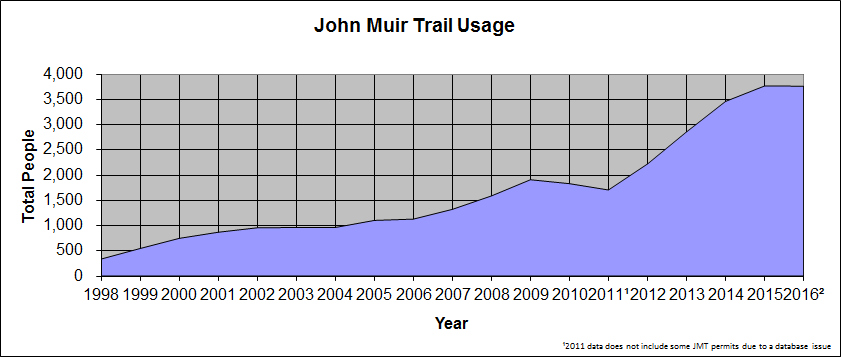
Yosemite is hugely popular and we need to find some just way to limit the number of people going in. There are three ways to visit Yosemite. PATRON ticket, MERIT ticket, and LOTTERY ticket. All are non-transferable.
The PATRON tickets are auctioned off. This raises a huge amount of money to maintain the parks and make the other tickets completely free.
The MERIT tickets are earned by visiting the less popular parks. You get park-points and eventually you earn enough to earn access to the really cool stuff. And you've also learned to appreciate what you're going to be looking at. If you've climbed some of the less popular climbing spots in the US, it should be easy for you to get access to half dome.
The LOTTERY tickets are free and open to everyone. Enter as often as you want. The lotteries are far enough out that you'll have time to plan around winning.
There are a lot of persnickety details, but I trust the Parks Service to be competent.
The same basic system could be used to fix basically any over-accessed place (famous galleries, Everest, Galapagos, etc). I think that everyone can get behind at least one of these principles (patronage, merit, persistence) and the vast majority of people can get behind the idea of needing the balance all three.